2025 – The International Year of
Glaciers´ Preservation
Breaking the ice

Glaciers have shaped our landscape through a series of ice ages. They have created fjords, valleys and mountain peaks. There are about 275,000 glaciers in the world today and, together with the two large ice sheets of Greenland and Antarctica, they store 70 percent of the world's fresh water. But now the glaciers are melting at a record rate.  


The UN has declared 2025 as The International Year of Glaciers’ Preservation. This initiative comes from Tajikistan. Can engagement and knowledge about the importance of glaciers and what is at stake help us make progress in reducing greenhouse gas emissions?  

A total of 153 of the 195 UN countries have supported the declaration of the Year for the Preservation of Glaciers and 21st March will be celebrated as International Glacier Day from 2025 onwards.  

In Venezuela and Slovenia, all the glaciers have gone, and in the European Alps up to two-thirds could disappear in the next 25 years. In Norway, glacier lengths have decreased by an average of almost 20 m per year since 2000. What must be done to change this trend?  

In this exhibition you will learn more about glaciers – why they are so important, what we can do to preserve them, and how the melting affects all of us. 

Les meir om utstillinga Les mindre Read more about the exhibition Read less

What is happening to the glaciers in Norway?

Glaciers and snowfields are a part of Norwegian nature. They are of great importance for hydropower production, tourism, outdoor recreation, and life in the watercourses downstream. Today, they constitute a volume of approximately 270 km³. In comparison, the Antarctica contains 3 million km³ of ice. 

The Norwegian Water Resources and Energy Directorate (NVE) monitors the glaciers with satellite imagery, aerial photos, and laser scanning to measure changes in height and area. Annually, they take front measurements on about 40 glaciers—ten of these are located in the Jotunheimen region. They also measure the mass balance on 10 glaciers, of which three are located in Jotunheimen, as well as one snowfield, Juvfonne, near Galdhøpiggen. 

Since the beginning of the 2000s, the glacier area in Norway has decreased by as much as 15%. The latest mapping done with Sentinel-2 satellite imagery from 2018 and 2019, showed a total glacier area for Norway of 2,328 km². This constitutes about 0.7% of the total land area. 

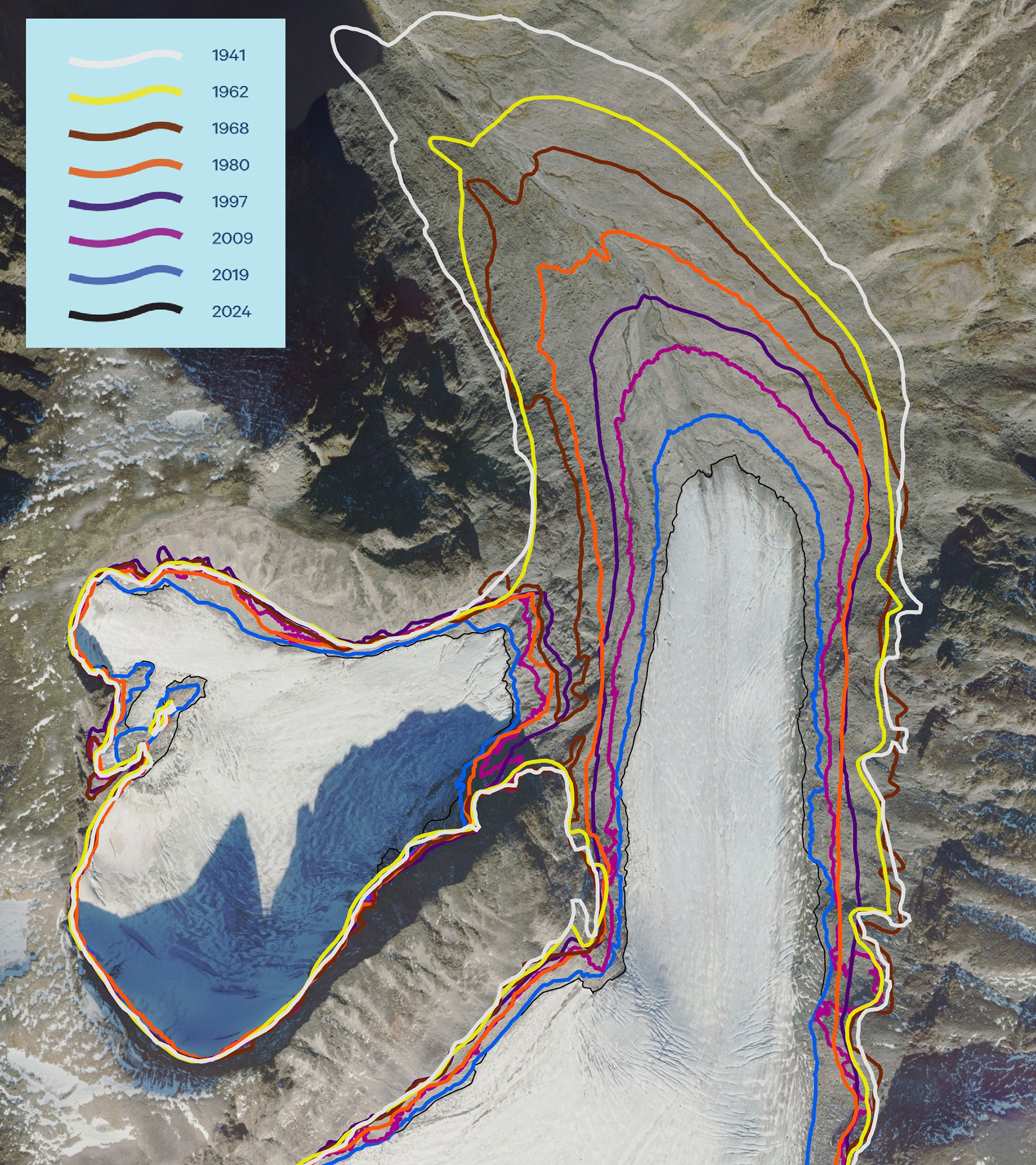
Since 2019, the glaciers have continued to shrink. This is clearly shown, for example on Hellstugubrean, where new aerial photos in 2024 are compared with previous mapping. 

Hellstuggubreen

Hellstuggubrean 1941 - 2024

A series of surveys conducted since 1941 show how the glacier has decreased in area. In 1941, the main glacier was connected to what is now a cirque glacier. During the 1960s, the main glacier retreated, causing the cirque glacier to become separated from it. The total area of the two glaciers combined has decreased by nearly 30% (from 4.3 to 3.1 km²). Between 2019 and 2024 alone, the main glacier front has retreated approximately 100 meters. 
Background photo: norgeibilder.no, 2024/NVE. 


Juvfonne

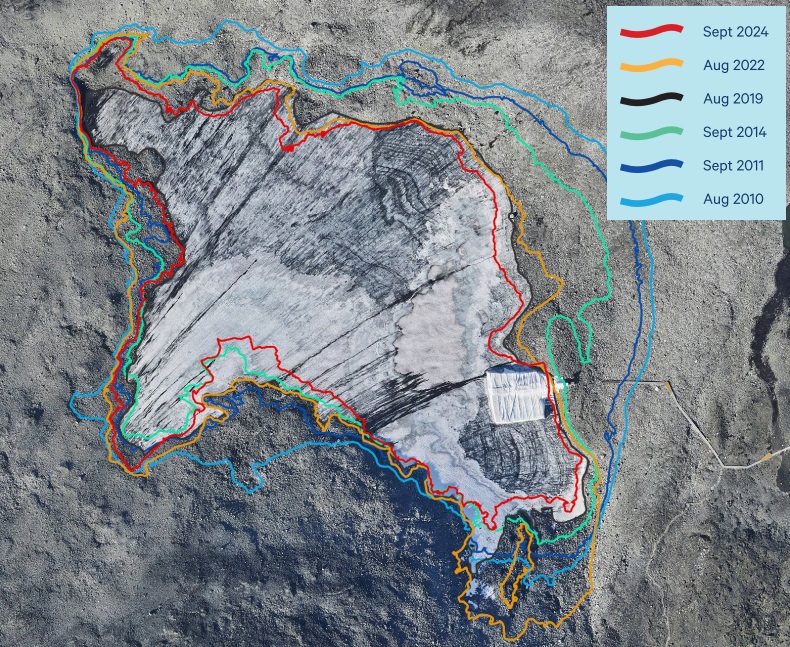
Juvfonne 2010 - 2024

The perimeter of the snow patch has been measured annually using aerial photographs, drone images, or by walking the perimeter of the patch and recording the position. The measurements show that the size of Juvfonna's perimeter varies from year to year and in some years, snow remains around the perimeter. From 2010 to 2024, the area of the snow patch decreased from 0.149 square kilometers to 0.081 square kilometers, a reduction of over 45% during this period. The background image is an orthophoto taken on August 26, 2019, by TerraTec for NVE.


Glaciers in Jotunheimen - now and then

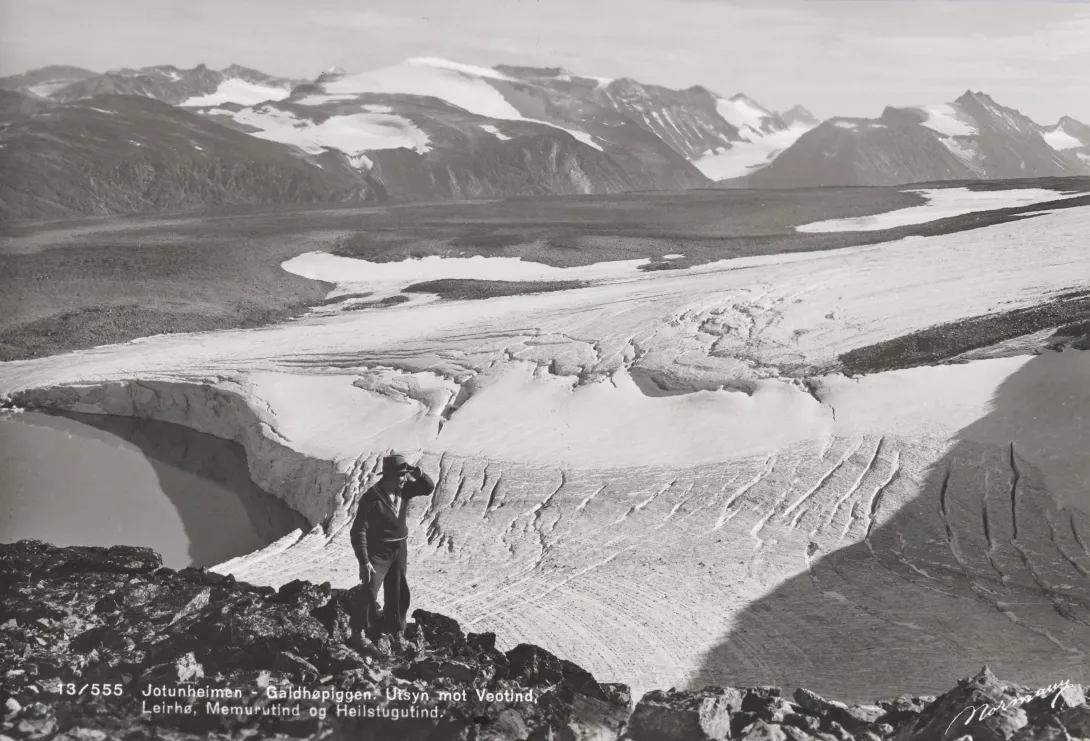
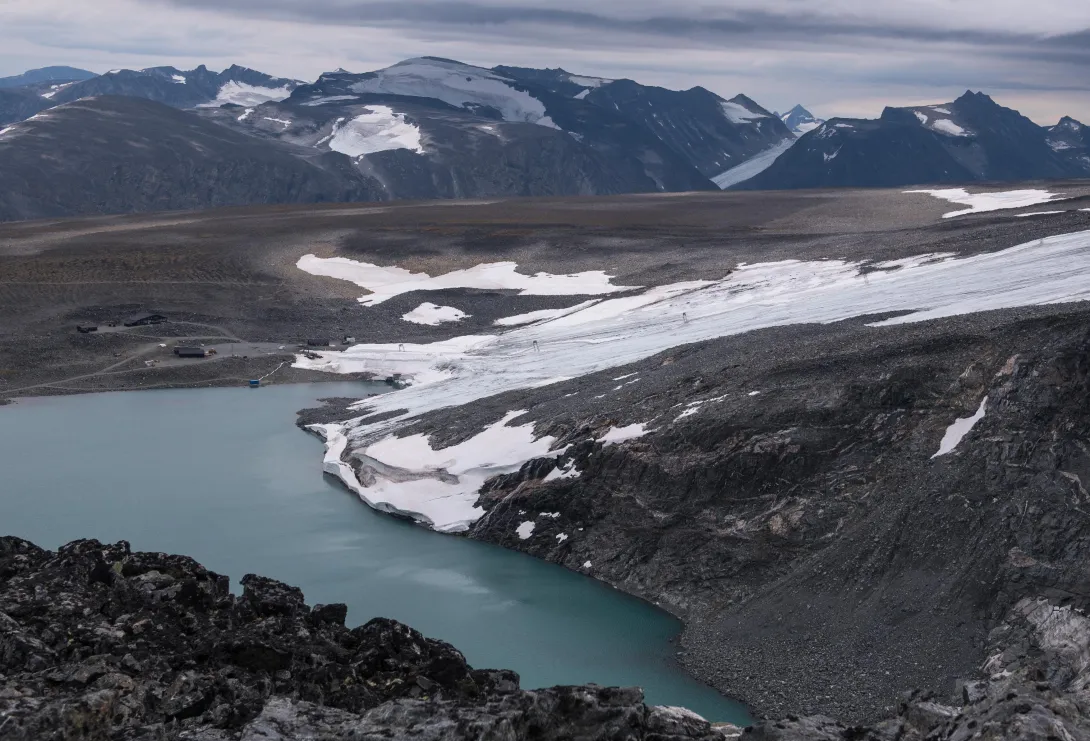
Vesljuvbrean 1900 - 2024

In 1900, the glacier Vesljuvbrean was connected to the cirque glacier in Kjelen. By 2024, much of the surrounding landscape had become ice-free. In the background, the glacier Hellstugubrean can be seen. It has significantly thinned since 1900. Vesljuvbrean is now the site of Galdhøpiggen Summer ski centre. 

Photo: 1900, The National Library / 2024, Mark Reysoo.
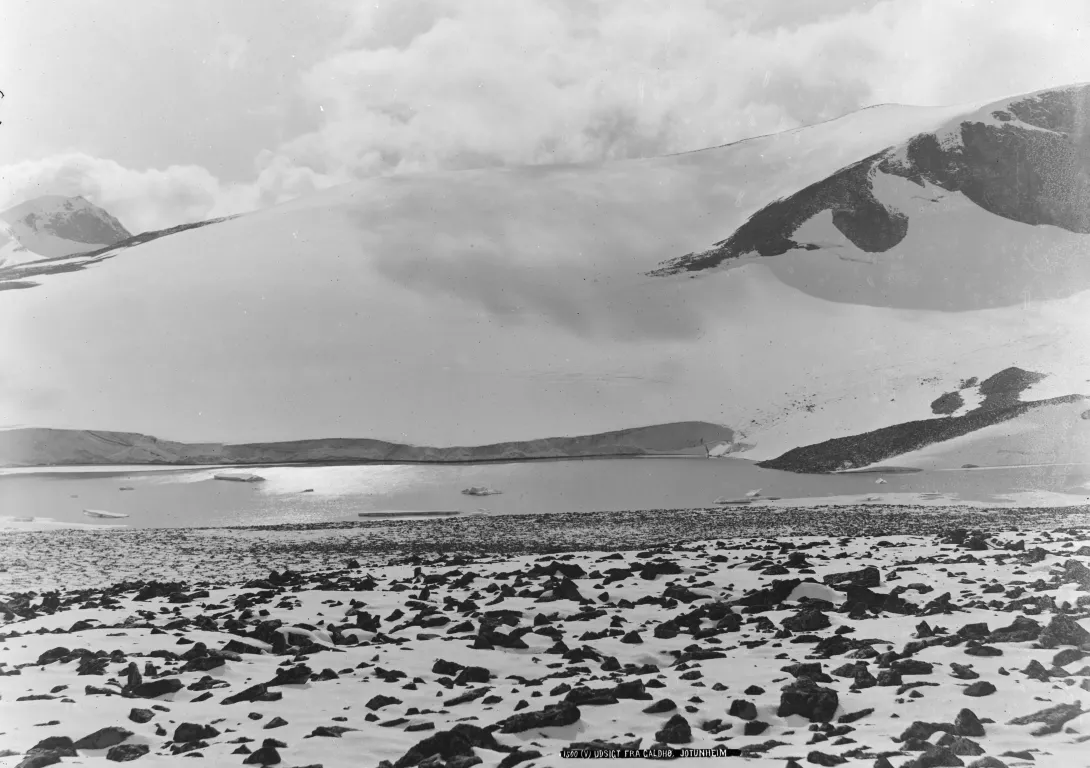
Vesljuvbrean 1890 - 2024

Photo: 1890, Knud Knudsen, University of Bergen library / 2024, Mark Reysoo.

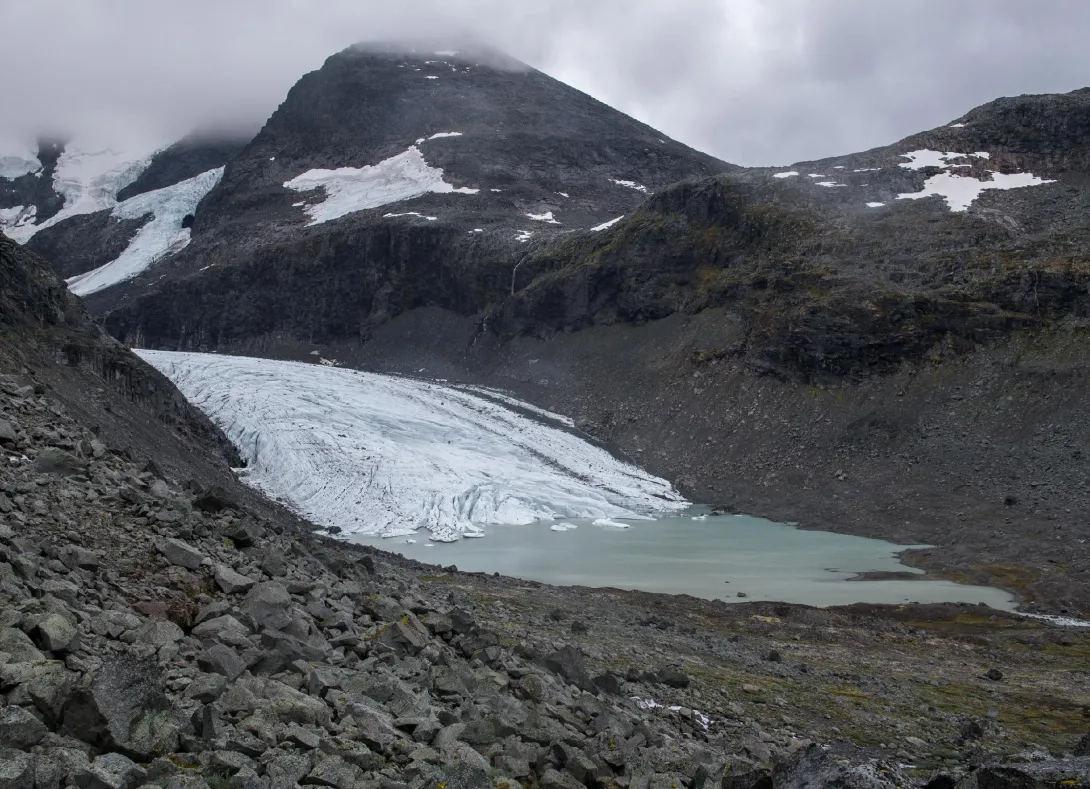
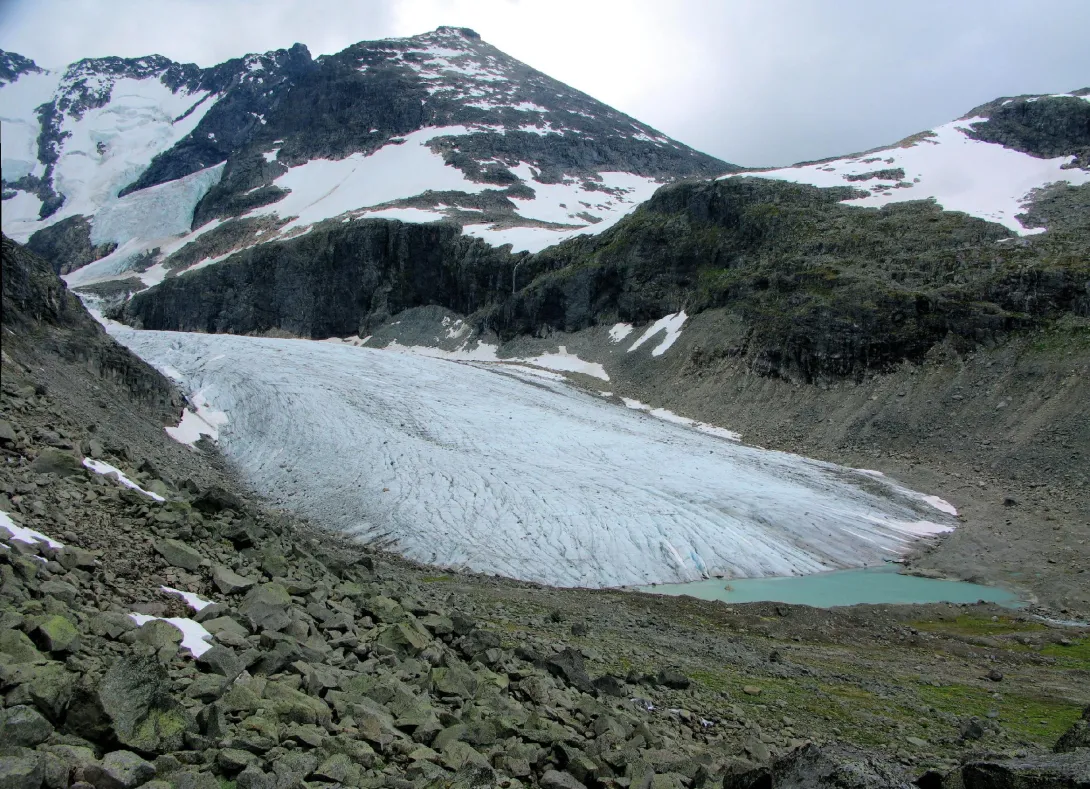
Styggedalsbrean 2009 – 2024

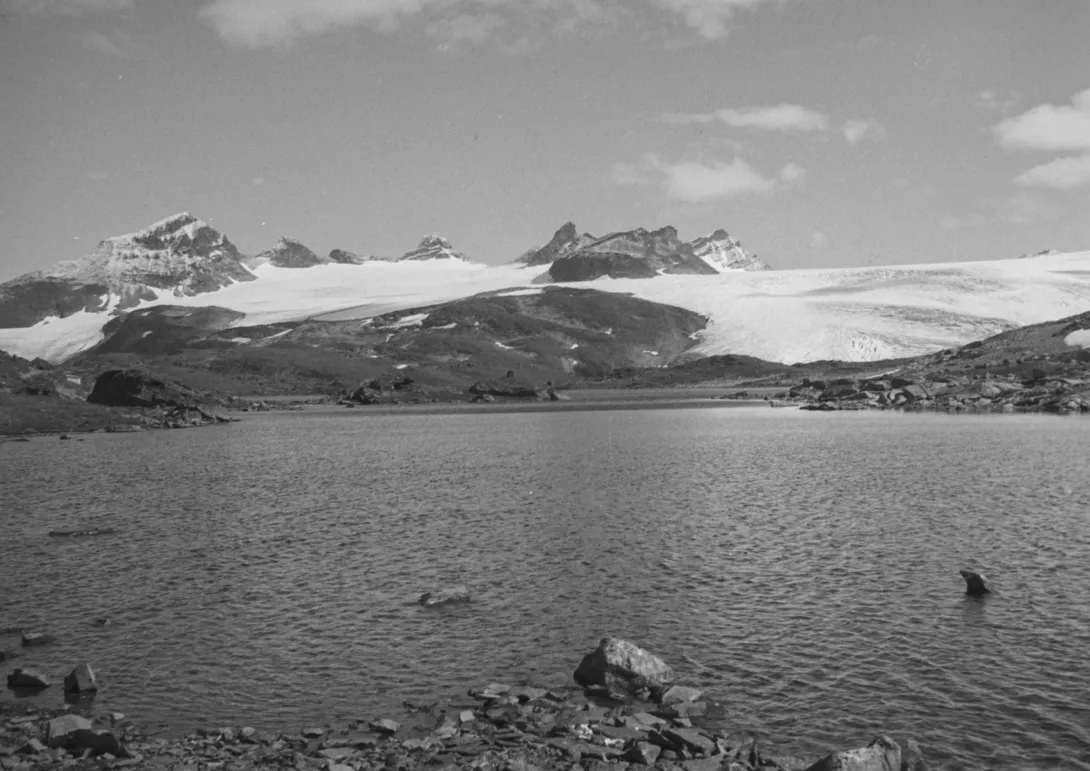
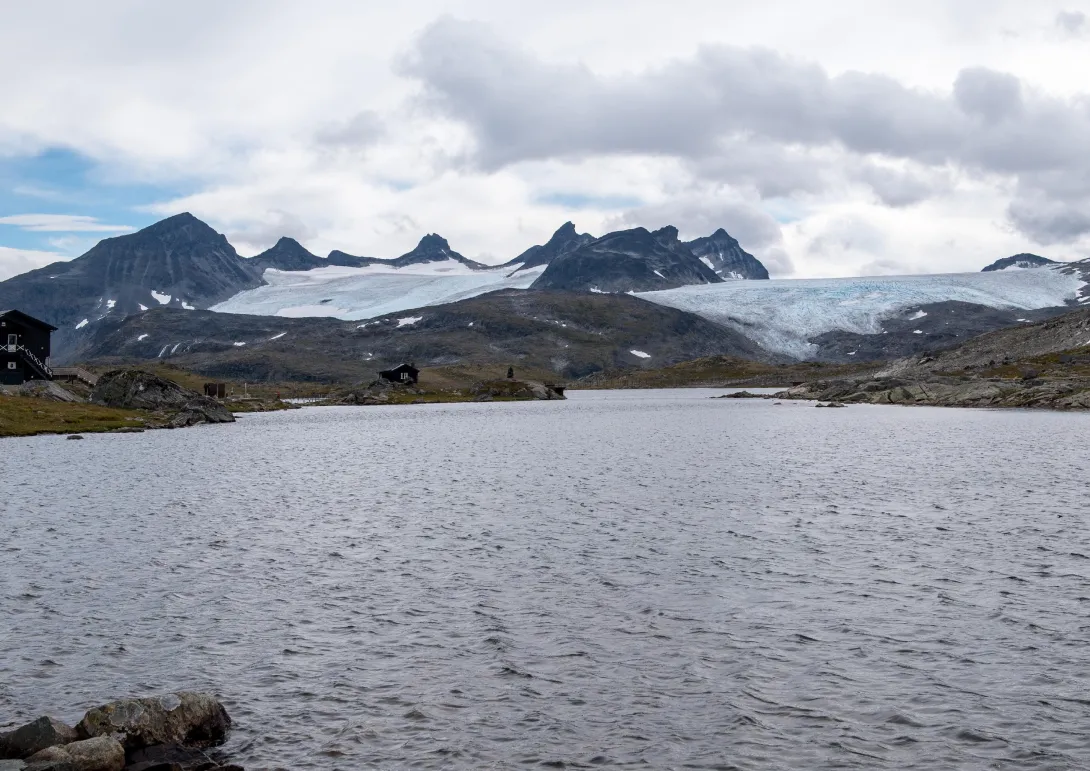
Styggedalsbrean is a valley glacier in Hurrungane in Jotunheimen. Studies have been conducted here since the 1920s, and the position of the front of the glacier has been monitored since 1901.In 2009, a small lake started to form at the glacier´s edge. By 2024, the lake had grown significatly in size. In the 15 years between the two photos, the glacier has retreated 290 meters.This corresponds to approximately 20 meters per year. 

Photo: 2009, Steve Selwood via Flickr / 2024, Mark Reysoo.

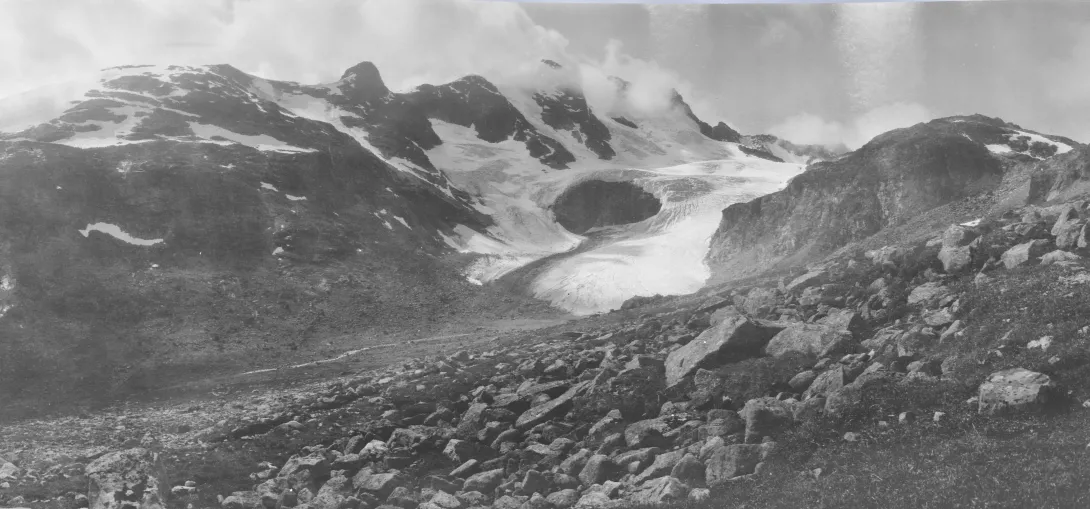
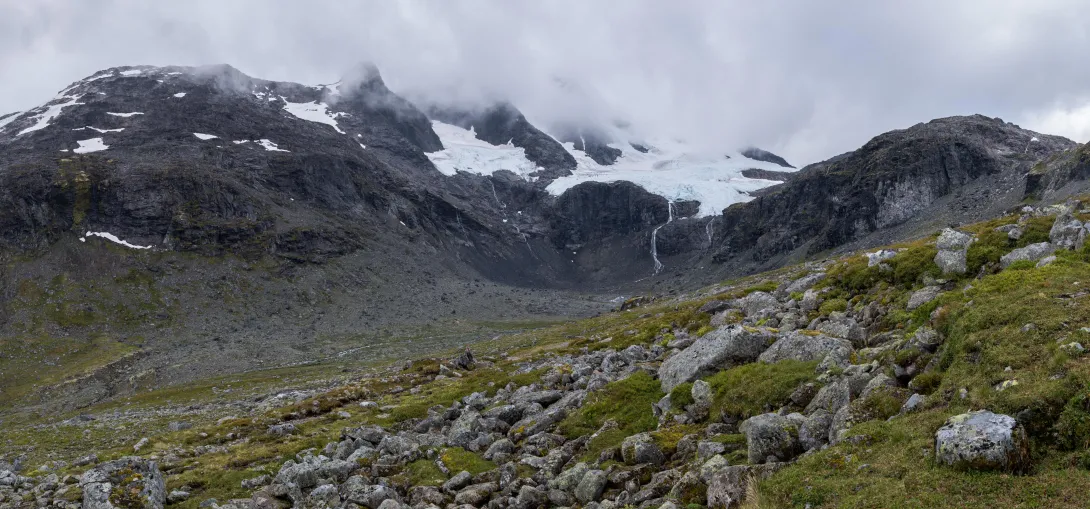
Gjertvassbrean 1919 - 2024

Gjertvassbrean is a glacier in the alpine mountain area of Hurrungane in Jotunheimen. In 1919, the glacier was contiguous and extended down to the flatter Gjertvassdalen valley. By 2024, it had retreated and the glacier front was higher up on the steep mountainside. Melting has also caused the glacier to split into several parts. The cirque glacier to the left is no longer connected to the larger glacier on the right. 

Photo: 1919, Jørgen Grundtvig-Olsen, University of Bergen Library / 2024, Mark Reysoo.

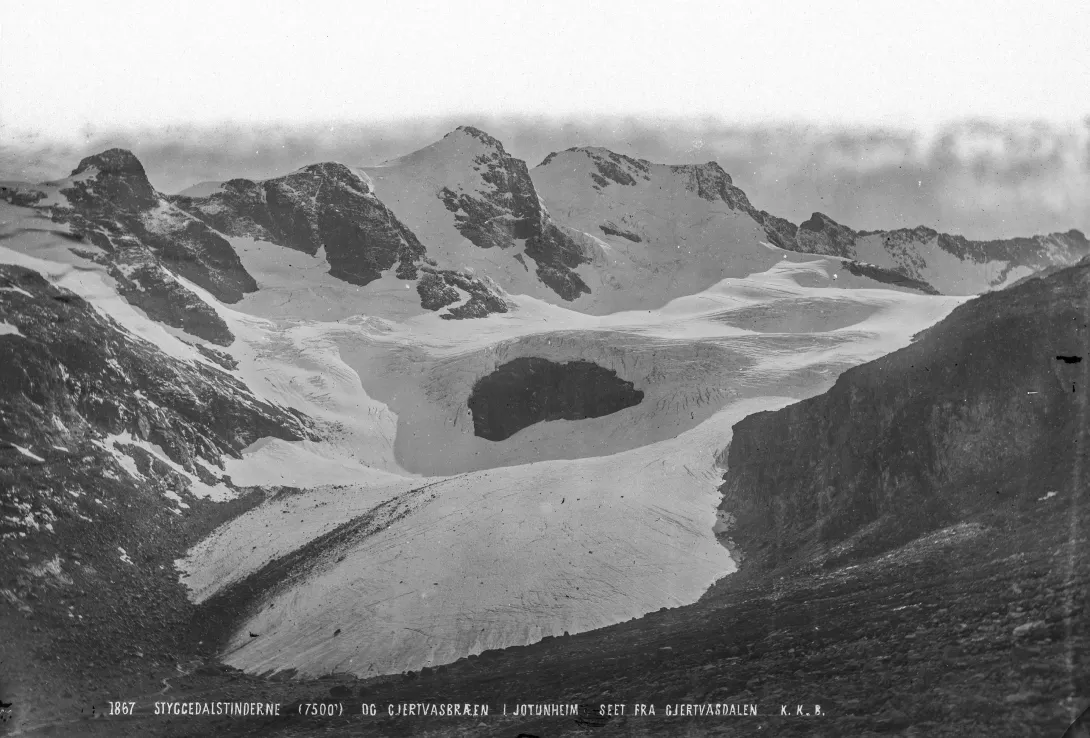
Gjertvassbrean 1877 - 2024

Photo: 1877, Knud Knudsen, University of Bergen Library / 2024, Mark Reysoo

Leirbrean and Bøverbrean 2009 – 2024

Smørstabbrean is the largest glacier in Jotunheimen and has several glacier tongues. In the photo, Leirbrean is visible on the left and Bøverbrean on the right. Both glacier tongues have decreased significantly in both thickness and extent. From 1938 to 2024 the glacier fronts have retreated approximately 700 meters.  

Photo: 1938, Ralph L. Wislon, University of Bergen / 2024, Mark Reysoo.

Vestre Memurubrean 2009 – 2024

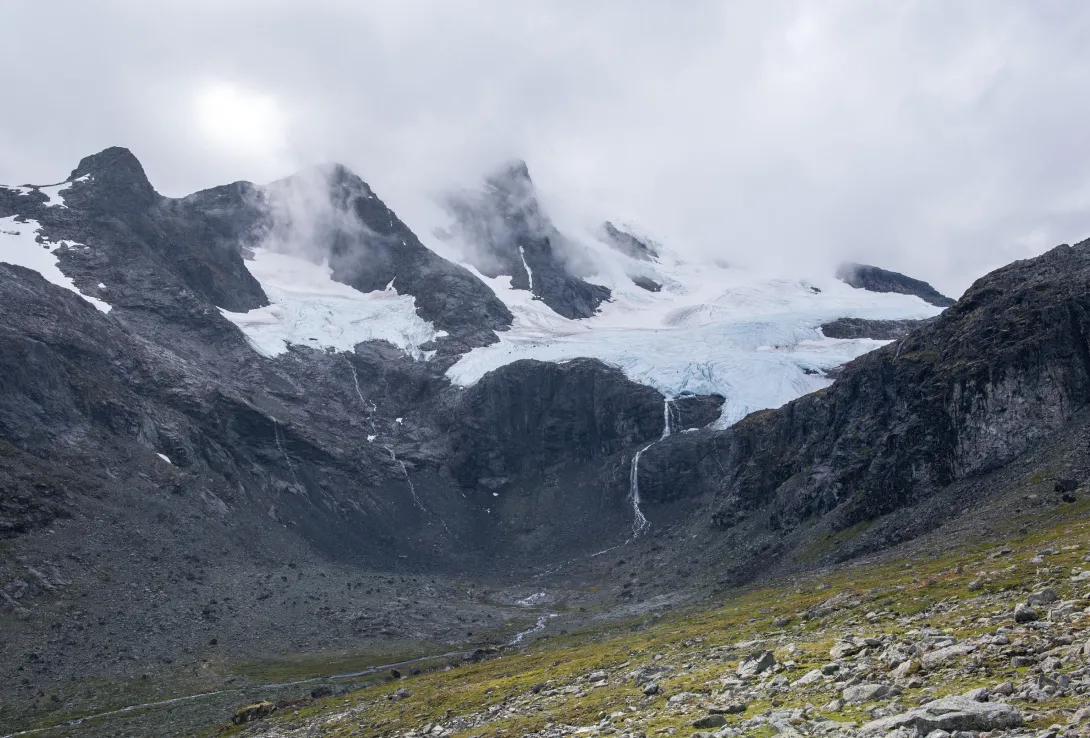
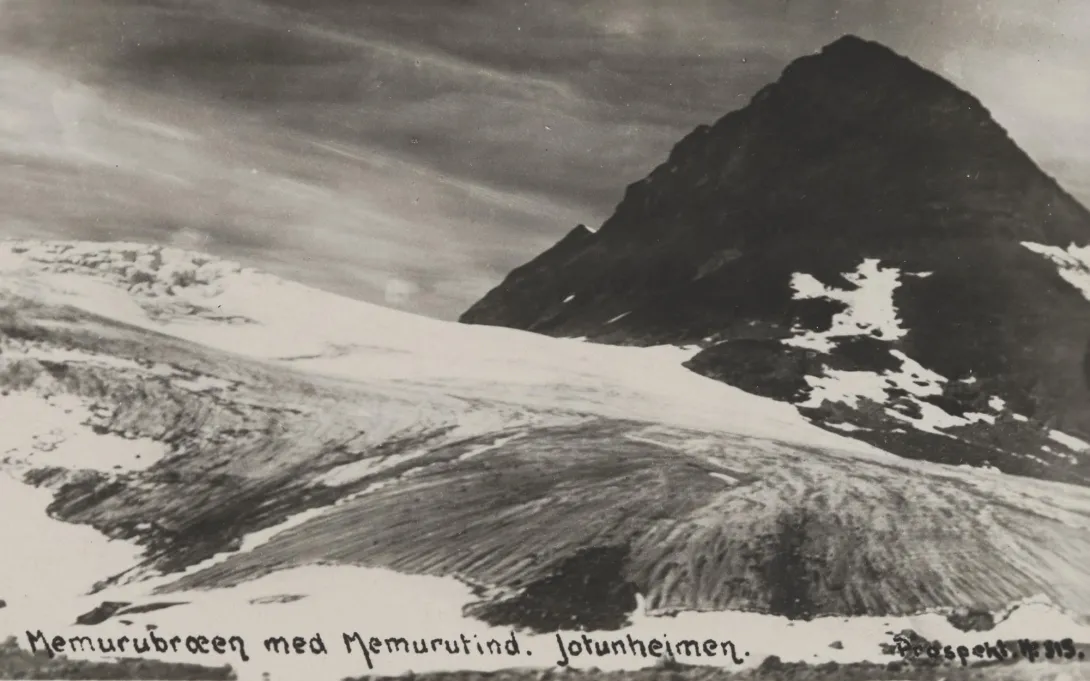
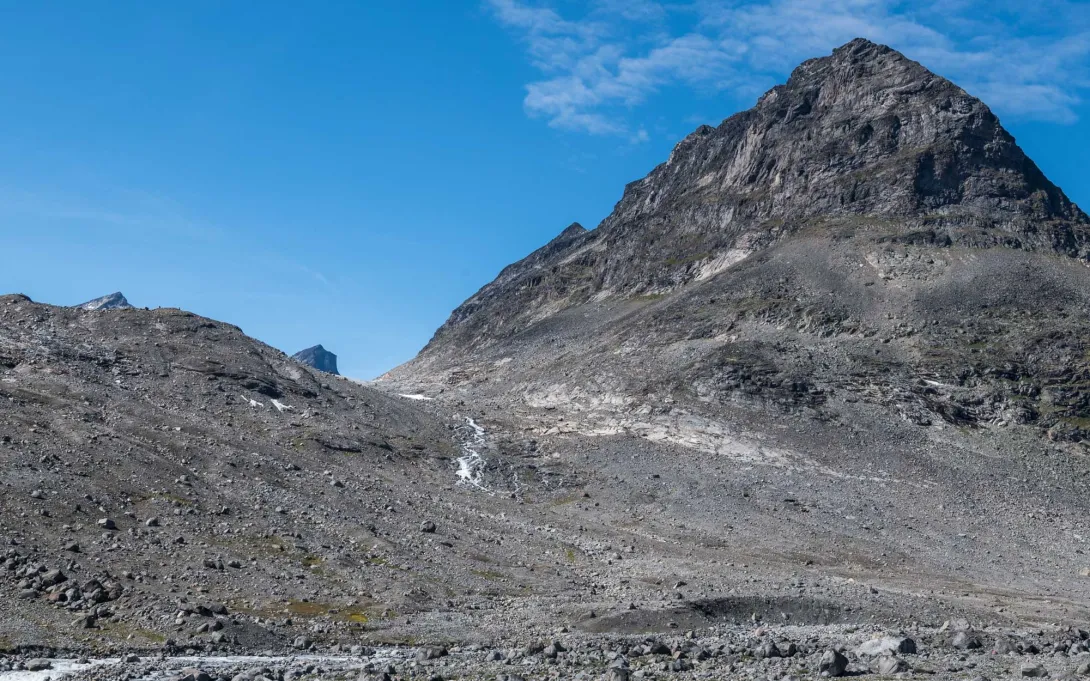
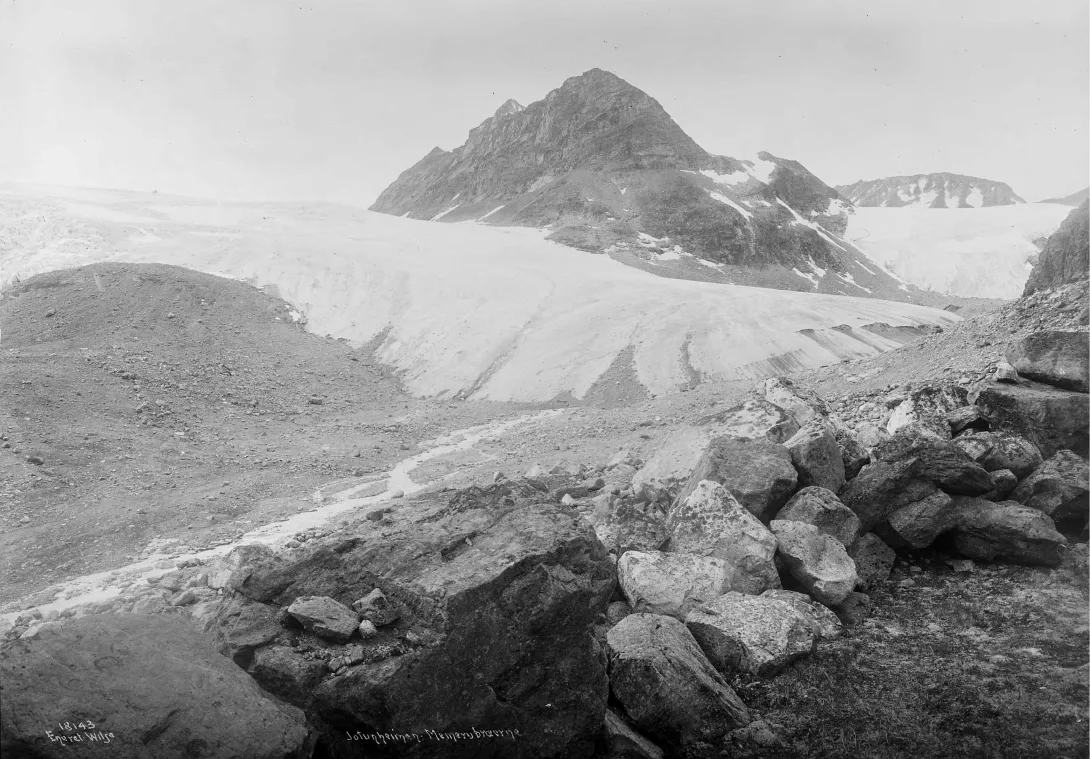
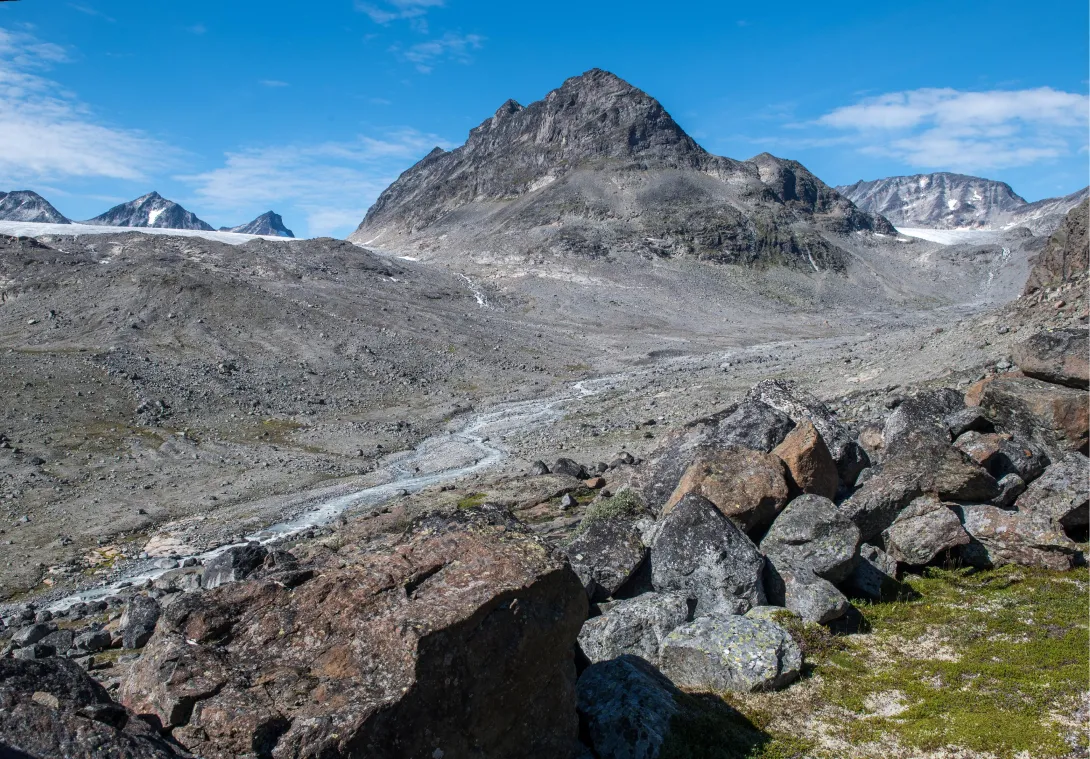
Vestre Memurubrean is a valley glacier connected to Hellstugubrean. There have been significant changes in the landscape since the first photo was taken in 1900. By 2024, the glacier was barely visible from same photo point. Measurements of the glacier from 1902 to 1954 showed a retreat of 700 meters. A series of surveys conducted between 1966 and 2019 show that the glacier has continued to lose volume.  

Photo: 1900, The National Library / 2024, Mark Reysoo.
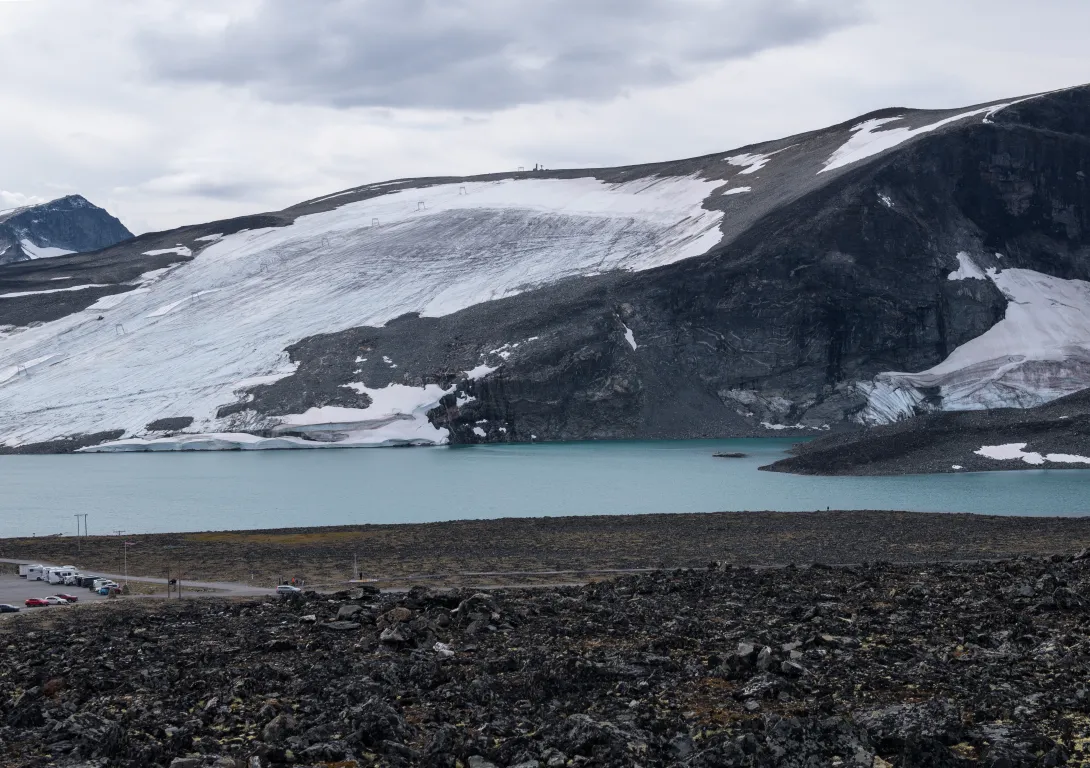
Vestre Memurubrean 1916 – 2024

Vestre Memurubrean is a valley glacier connected to Hellstugubrean. There have been significant changes in the landscape since the first photo was taken in 1900. By 2024, the glacier was barely visible from same photo point. Measurements of the glacier from 1902 to 1954 showed a retreat of 700 meters. A series of surveys conducted between 1966 and 2019 show that the glacier has continued to lose volume.  

Photo: 1916, Anders Beer Wilse, The National Library / 2024, Mark Reysoo.
The glaciers around Galdhøpiggen

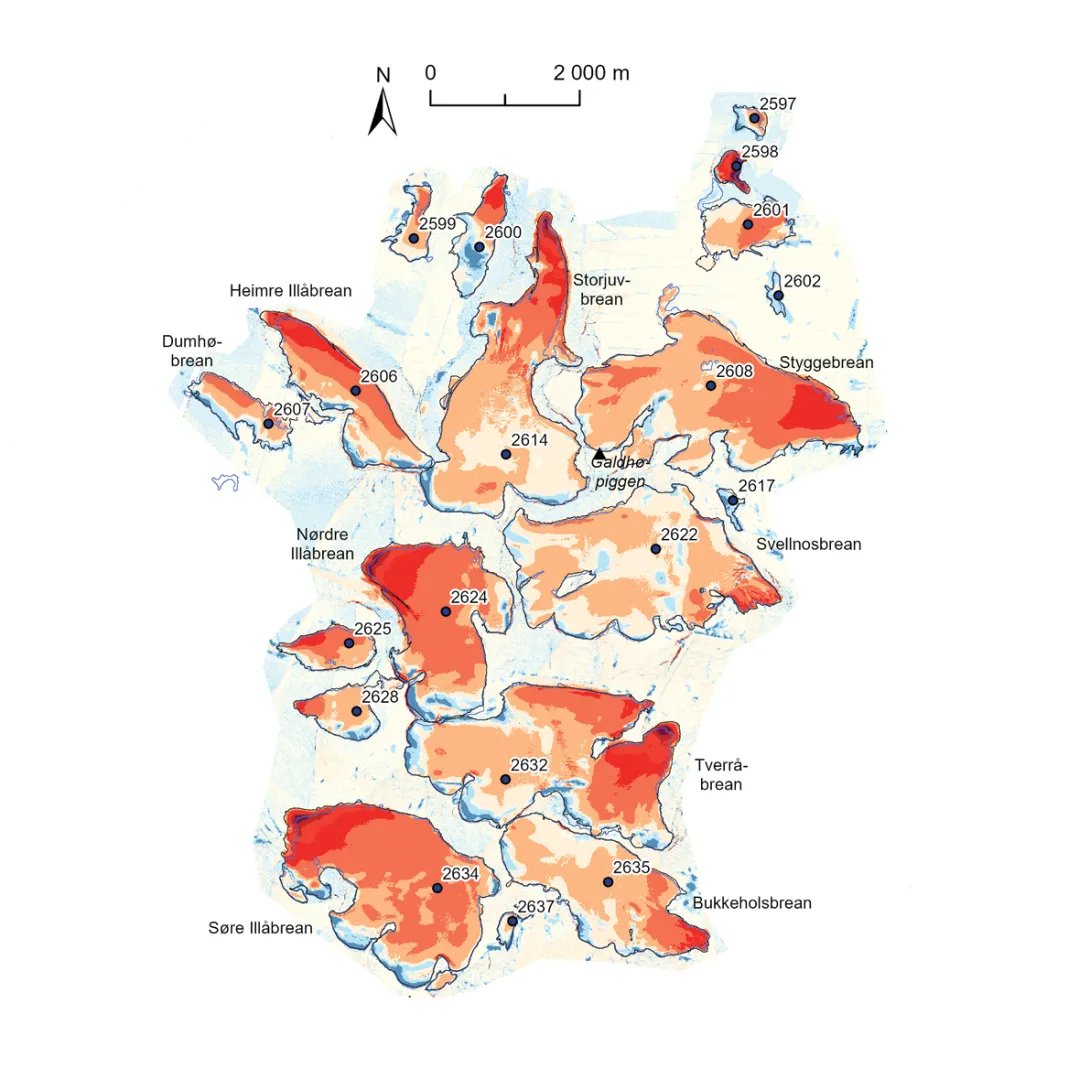
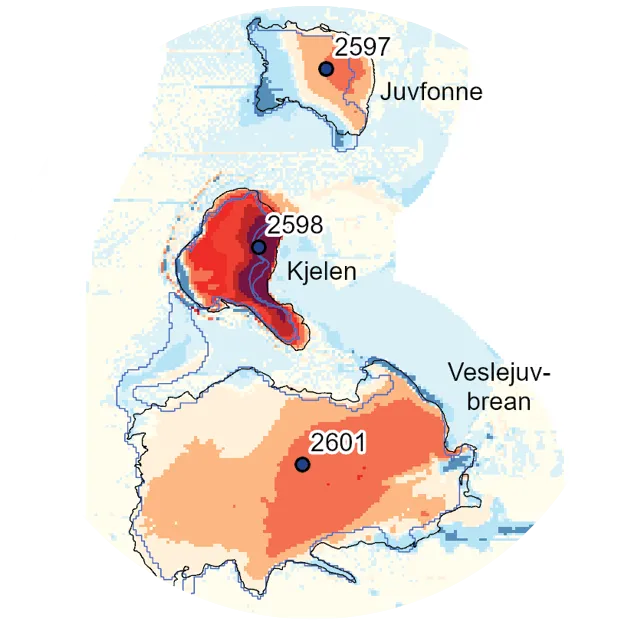
The map shows the glaciers surrounding Galdhøpiggen, the highest peak in Norway. The glacier surfaces were measured using laser scanning in 2011 and 2020. By comparing these two mappings, it is possible to see how much the glaciers have changed. The darker the red, the more the glacier has melted. This method is called repeated mapping and enables more glaciers to be mapped than can be done using field measurements, which are costly and time-consuming. 

The glaciers have decreased the most at their fronts, and Kjelen is the glacier that has decreased the most, with 19 meters in thickness over these 9 years. Juvfonna has decreased less, around 3 meters on average. Overall, for all 19 glaciers mapped, the decrease in thickness is 4 meters on average and 4% in area. 

Map: NVE

Breane kring Galdhøpiggen 2011 – 2020

What´s happening to the world´s glaciers?

Studies from all over the world show that glaciers are shrinking, and that the rate of melting has increased in recent years. These studies use several techniques, including satellite images and field measurements of glaciers. 

An example is the recent GlaMBIE study that shows how the world’s glaciers shrunk between 2000 and 2023. In just over 20 years, 5% of the total ice mass melted globally.  

Some regions saw much high glacier melt than others, such as the European Alps, the Caucasus and New Zealand. 

In the film below you can learn more about the GlaMBIE study and how researchers work to gain knowledge about the world's glaciers.

Knowledge and experience around the world

How do different societies adapt to the changes happening to glaciers? 
Gain insight into glacial landscapes around the world and get to know some of the people who live in them.

Image removed.

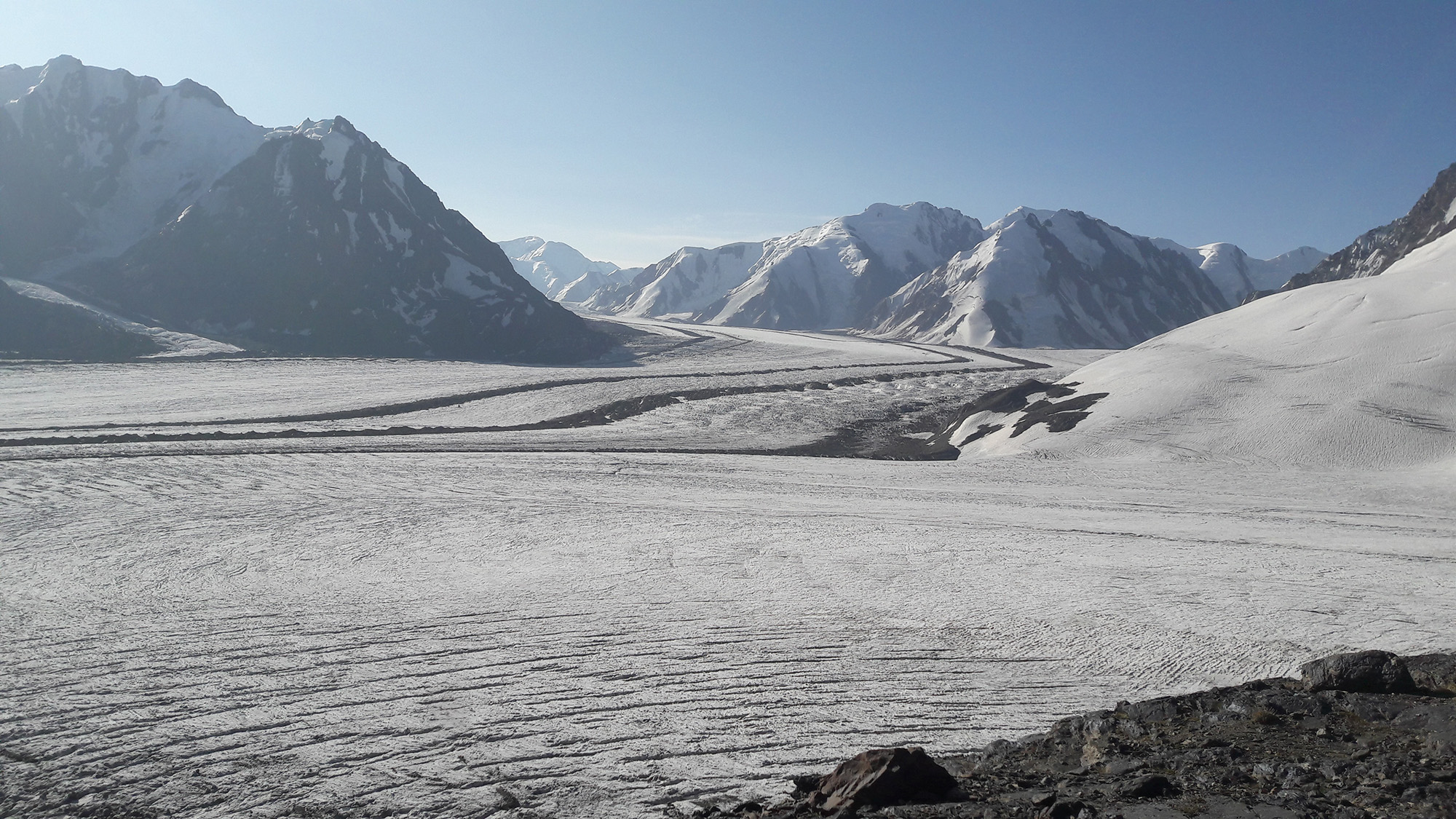
The Glacier Vanj-Yakh, the longest glacier in the world, outside the polar regions. Photo: Agency for Hydrometeorology of Tajikistan 


Tajikistan

The idea to declare 2025 as the International Year of Glaciers’ Preservation was proposed by Tajikistan, a country in Central Asia where over half of the land is situated above 3000 meters elevation. Mountains make up more than 93% of the total area, while lowlands consist of cultivated land, desert and steppe terrain.   

The unique geography, with significant elevation differences, also leads to large climate variations – from cold, snow-rich mountain regions to hot temperature in lowland cities. Glaciers in the Pamir-region in Tajikistan play a key role in regulating the region's water resources and climate. The largest glacier is the iconic glacier Vanj- Yakh, formerly called Fedchenko.  At 77 km in length, it is the longest glacier in the world outside the polar regions. Over the past century, it has retreated by up to 1.5 km - a clear sign of global climate change. 
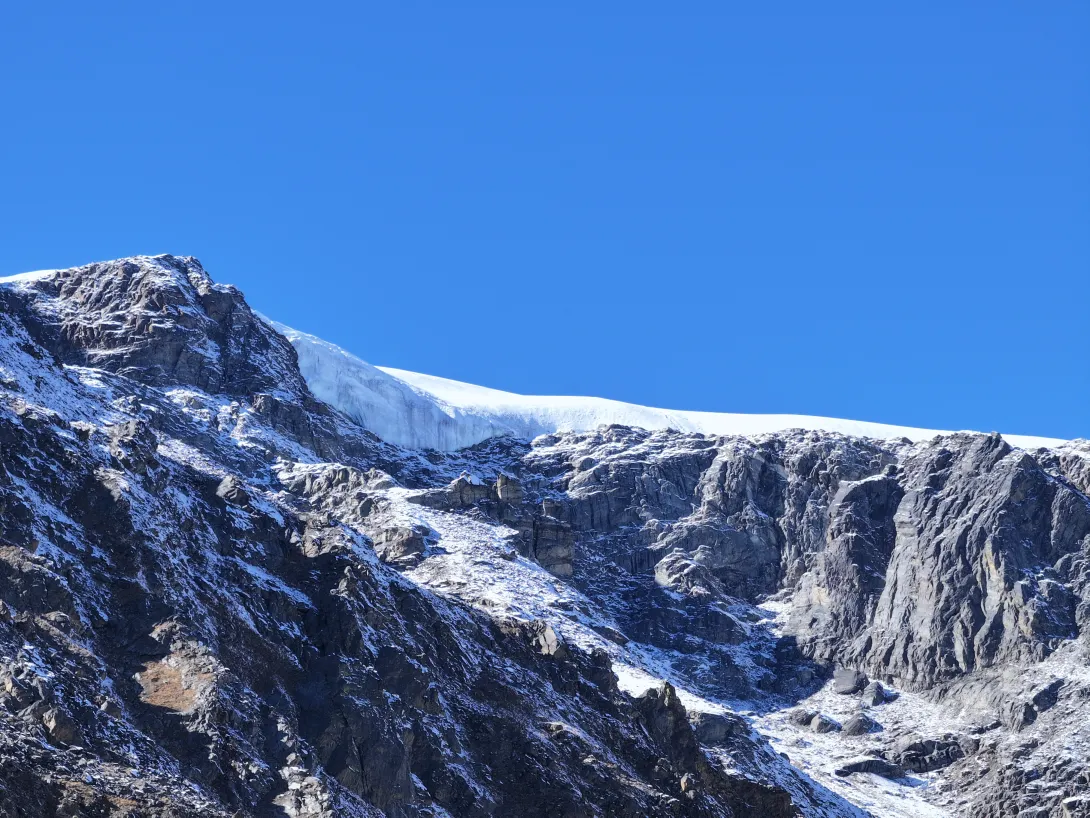
Glacier monitoring in Tajikistan began in 1956, but has been discontinued at times, mainly due to geopolitical conditions and relatively inaccessible areas. Present work includes regular monitoring using satellite observations, drones, and data modelling to assess how climate change is affecting the glaciers. International collaboration is essential in this process, which is also supported through initiatives such as this International Year of Glaciers’ Preservation.  

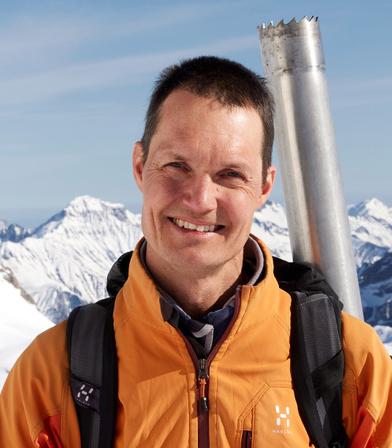
Matthias Huss
Matthias Huss
Glaciologist and senior scientist
ETH Zürich, Switzerland

My relation to glaciers is two-fold: On one hand, I’m a researcher interested in the state and the evolution of glaciers. On the other hand, I’ve been fascinated by glaciers and all their facettes since early childhood and I visit the mountains whenever I can in my free time to admire their beauty. If the ice melts, this thus affects both my professional and my personal relationship to glaciers. 

I have observed huge changes since I became a glaciologist 20 years ago, and even more since I visited the glaciers as a little boy. These changes are so tremendous and rapid it’s impossible to miss them. Every time I come back to monitor «my» glaciers, I’m amazed – sometimes even shocked – about what has happened again in the space of just a few weeks. 

We, as Swiss glaciologists, are affected by the rapid wastage of glaciers, because our long-term monitoring sites are disappearing. We are now the generation that is witnessing the end of those invaluable data series documenting the effect of climate change on the ice. Some glaciers have literally melted away completely, and all we could do was to ultimately collect our measurement equipment and leave the place as a desolate and unstable debris slope without ice. The Swiss population is also affected by glacier retreat due to changes in water availability and hydropower production. But also hazards from deglaciating mountains have also increased recently and are posing a threat to mountaineers and valley communities.   

On the pictures:
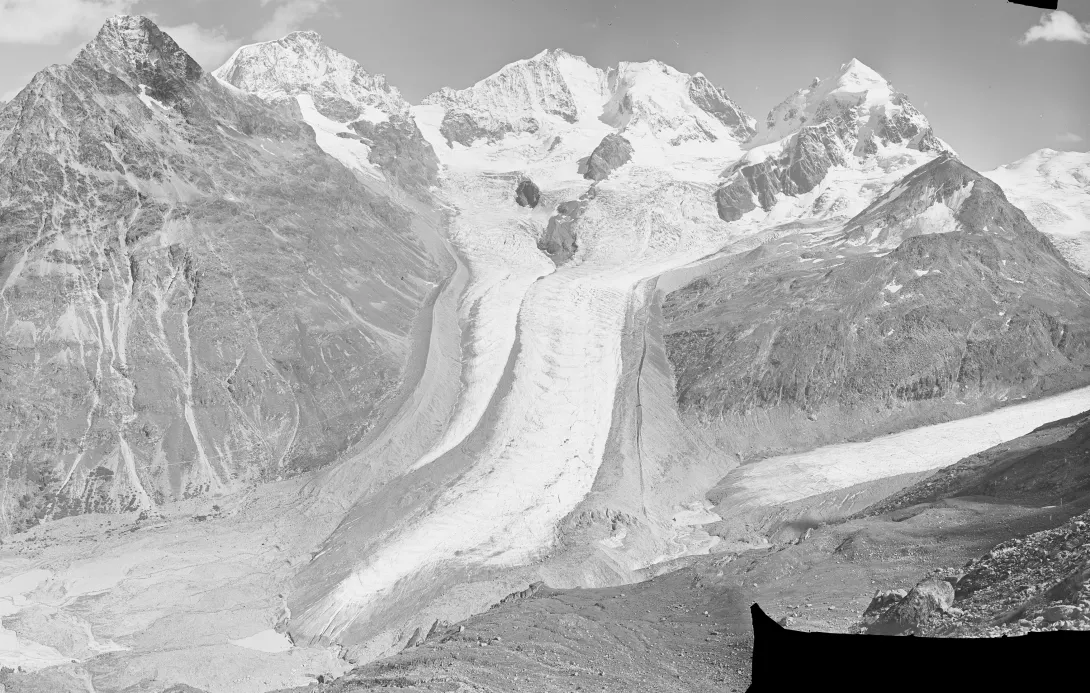
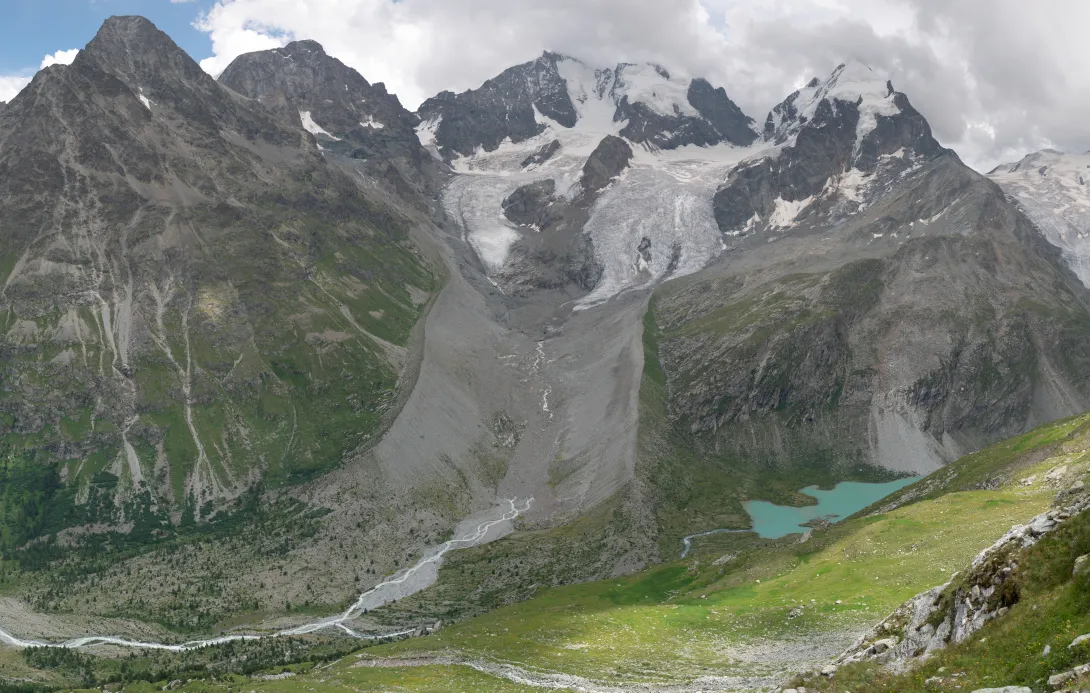
Big changes on the glacier Vadret Alp Ota from 1935 to 2022.
Photo: 1935, Swisstopo/ 2022, VAW, Glaciology ETH Zürich

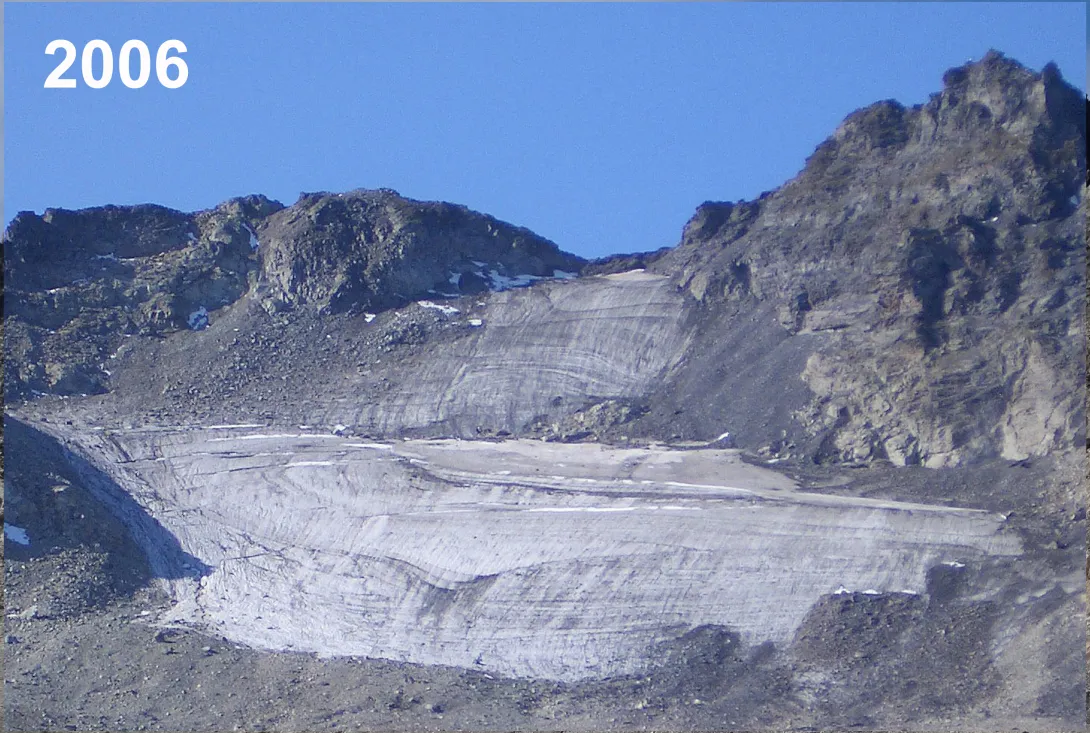
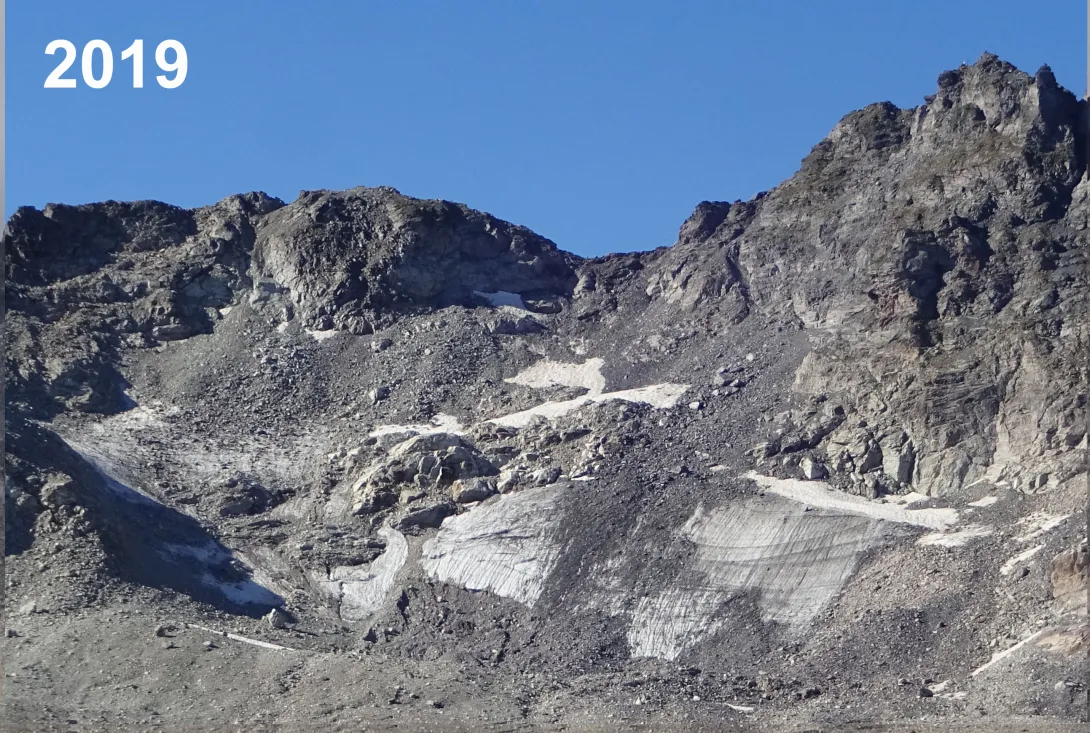
Pizolgletcher in 2006 and 2019, one of the glaciers in Switzerland that has now disappeared.
Photo: Matthias Huss

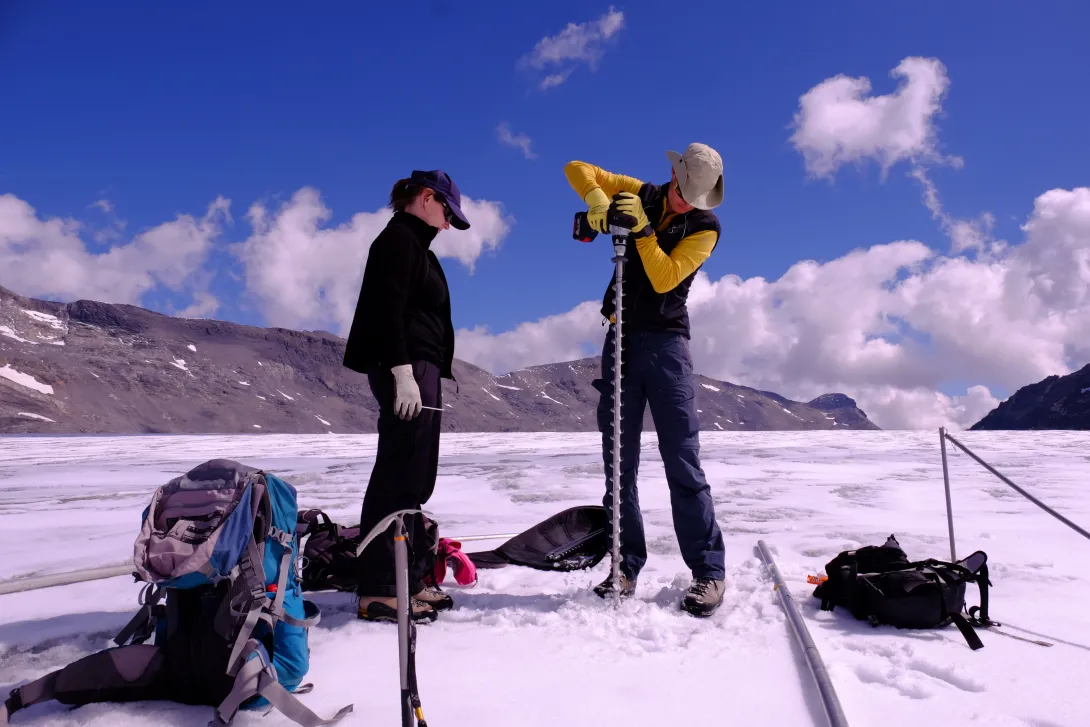
Doing fieldwork on a glacier.
Photo: Matthias Huss

Vadret Alp Ota 1935
Vadret Alp Ota 2022
Borring på bre
Heather Purdie
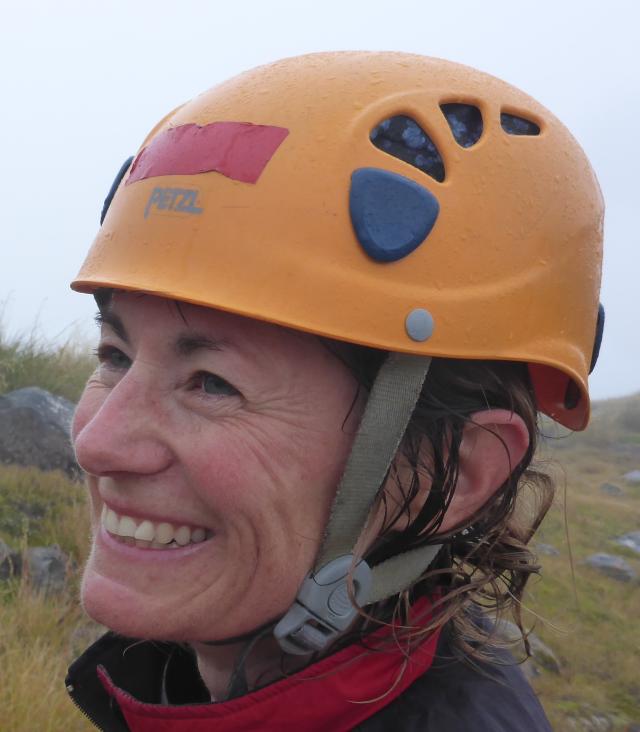
Dr Heather Purdie
Christchurch, New Zealand
Associate Professor in Glaciology
University of Canterbury

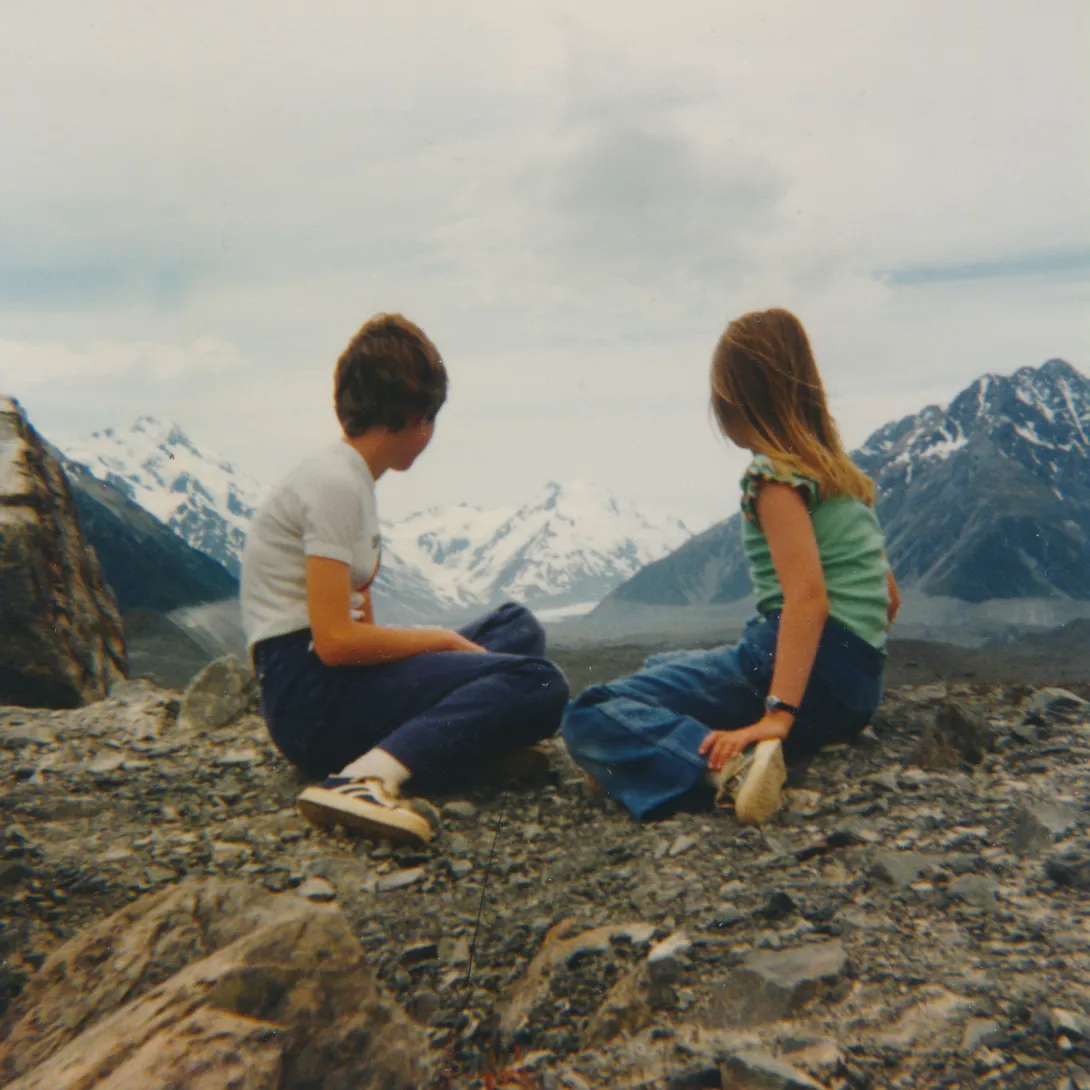
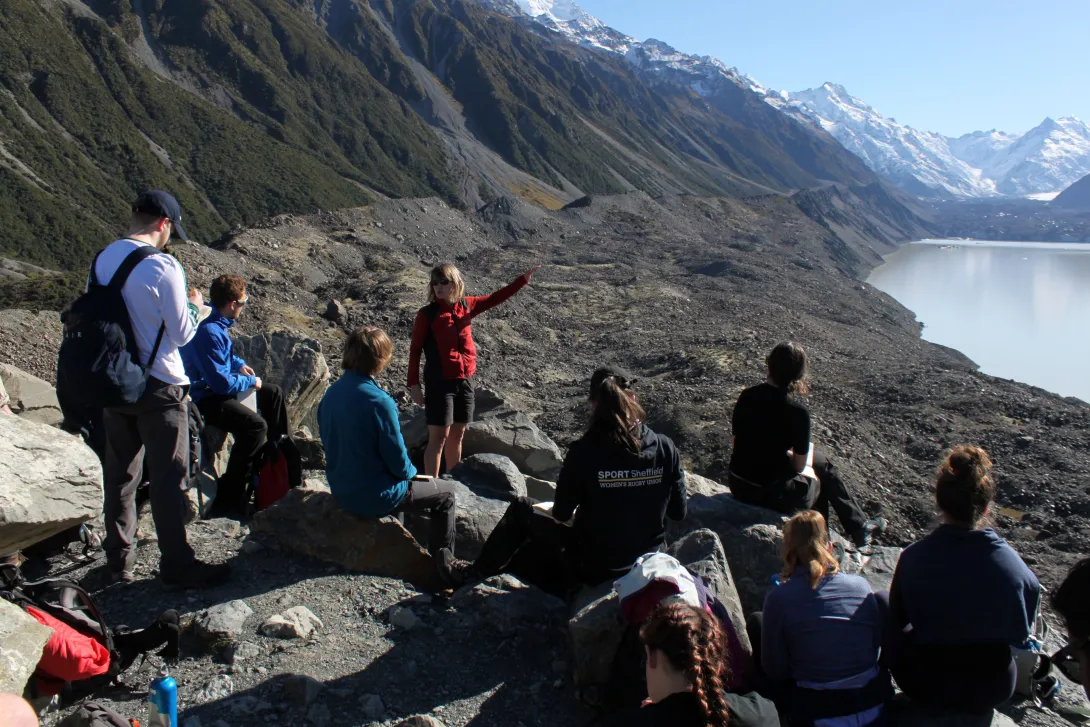
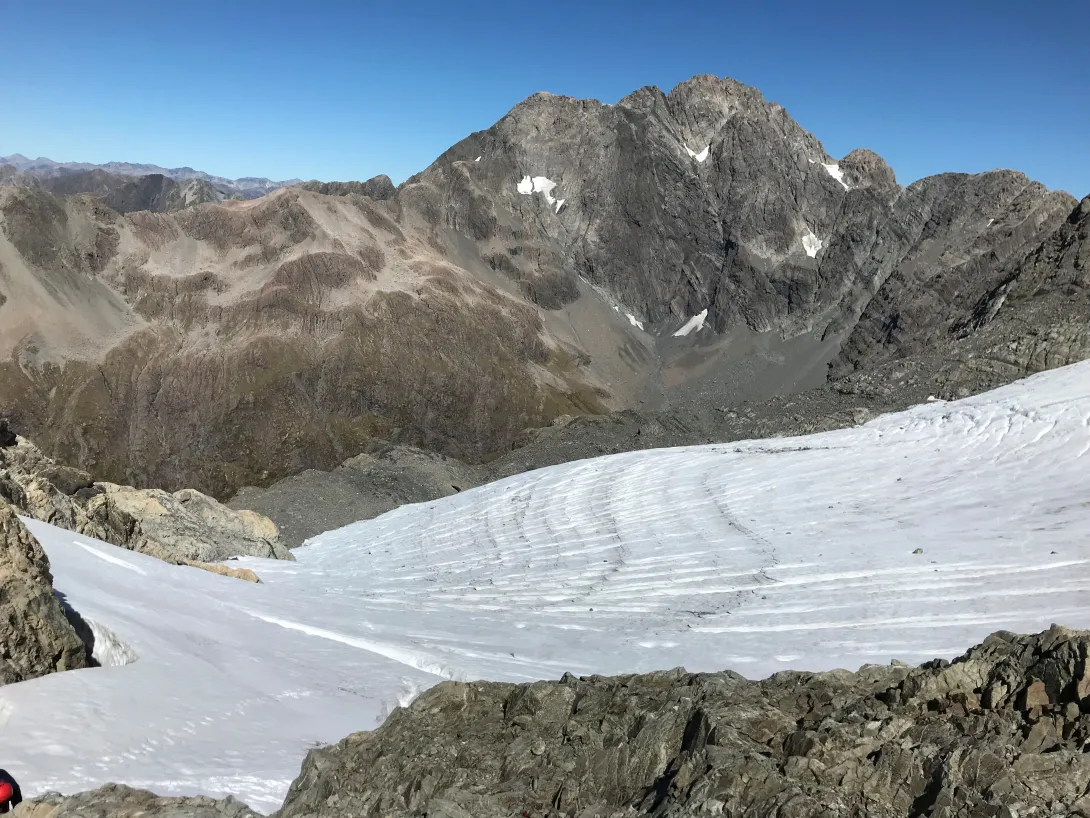
My passion for mountains and glaciers was instilled when I was 7 years old. Our family went on holiday to Aoraki Mount Cook National Park, visiting the Haupapa/Tasman Glacier. Thirty years later I was back with a group of university students, explaining why the area where I had sat as child, was now a lake more than six kilometres long. As a hiker and mountaineer, I love being in the mountains. They have a power and beauty that is energizing. 

I began my glaciological career at the Fox Glacier, situated on the western side of the Southern Alps. Since 2009 the glacier has continually thinned and shortened. The biggest change has however been seeing the rapid development and expansion of large proglacial lakes. They form at the termini of the large valley glaciers in Aoraki Mount Cook National Park, like the Tasman Glacier Lake which is growing larger and deeper each year.  

Shrinking glaciers in New Zealand have significant negative impact on glacier tourism and recreation space. Glaciers have become inaccessible for walking and climbers need to negotiate steep, loose, moraine walls, face large bergschrunds and deal with increased rockfall in order to reach the higher peaks. Additionally, some of New Zealand’s largest glaciers reside at the top of catchments that are key components of the hydroelectricity industry, and many farming systems are strongly reliant on irrigation networks; industries that will be impacted by ongoing ice loss. 

On the images:
Family holday in Aoraki Mount Cook national park, with a view to The Tasman glacier.

Heather viewing The Tasman glacier many years later, as a teacher with a school class.

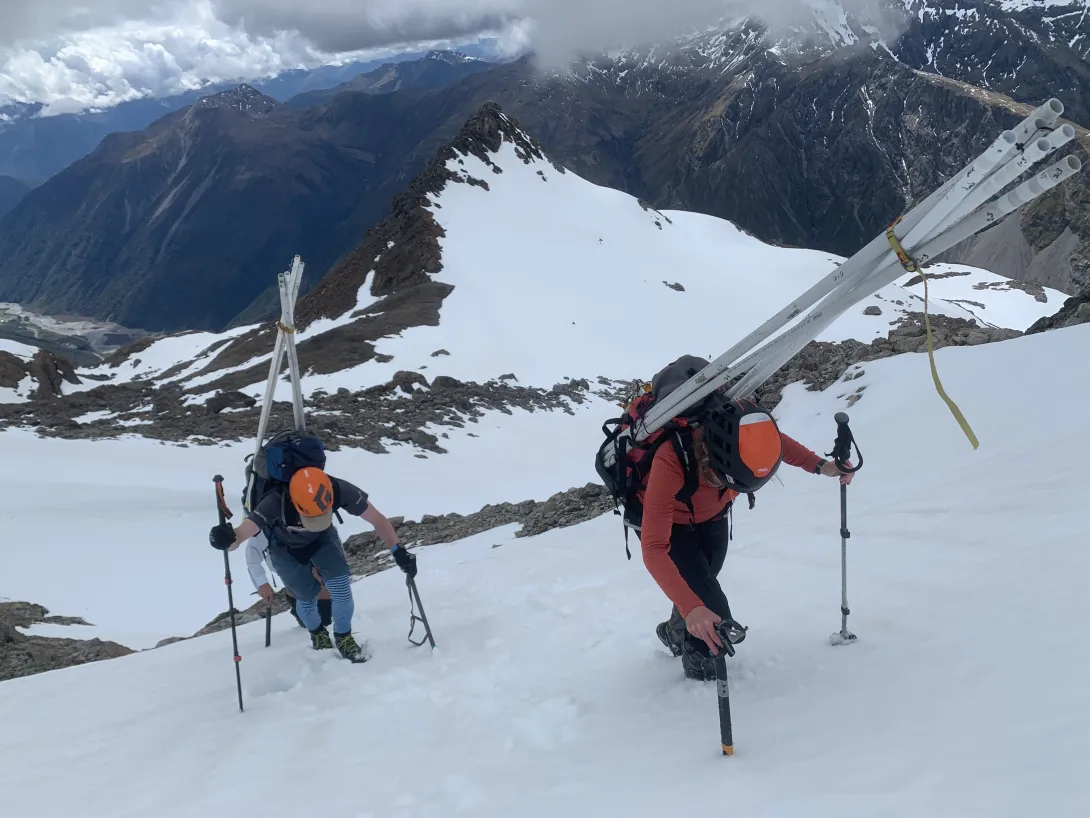
Heather on her way to work on The Rollestone glacier. 

Big changes on The Rollestone glacier from 2014 to 2024. Photo: 2014, Rack
All other photos: Heather Purdie

Familieferie i Aoraki Mount Cook nasjonalpark
Heather som lærer med skoleklasse på Tasman breen
På vei til Rollestone breen
Rollestone breen
Paula Lady Pacheco Mollinedo
La Paz/Bolivia
Hydrologist and climate scientist


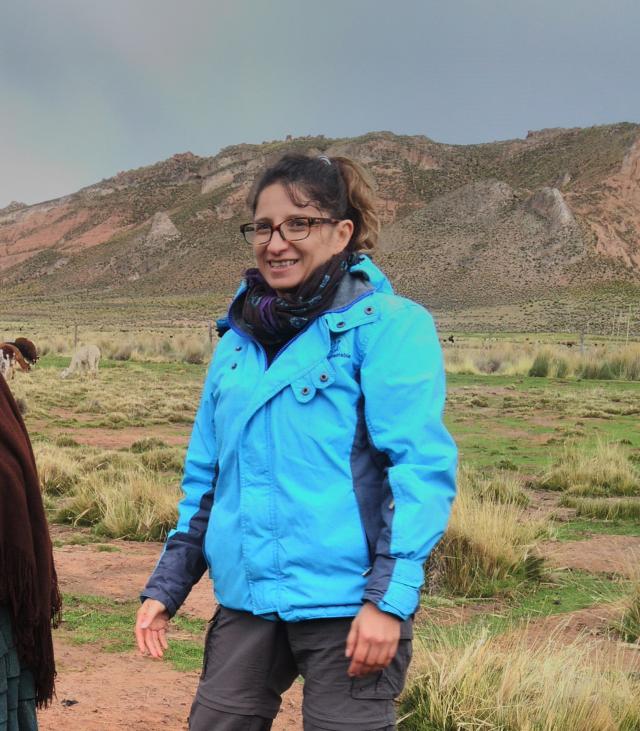
I live in La Paz, a city nestled among glacier-capped mountains. For us, these mountains are not just sources of water — they are sacred beings. We see them as our grandparents: they protect us, guide us, and are part of our identity. Working in the Andes, I’ve come to understand glaciers not only as key components of the hydrological cycle but also as spiritual and cultural pillars of mountain life. As a hydrologist, I study how their retreat affects water systems and livelihoods, but my connection to them goes far beyond science. 

 
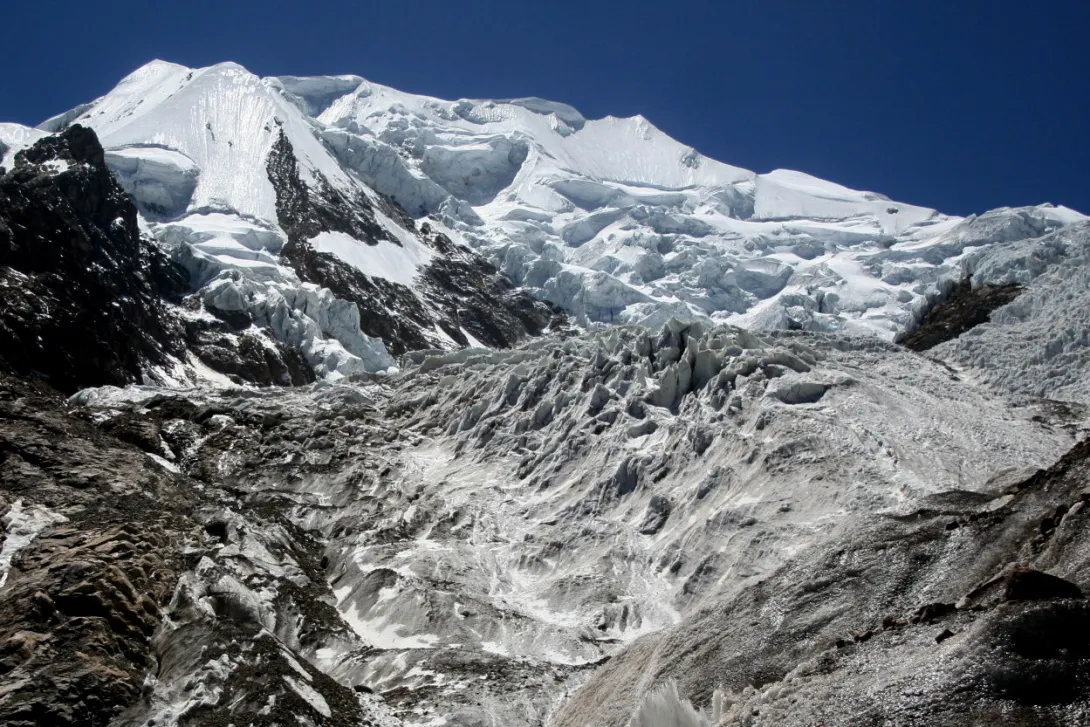
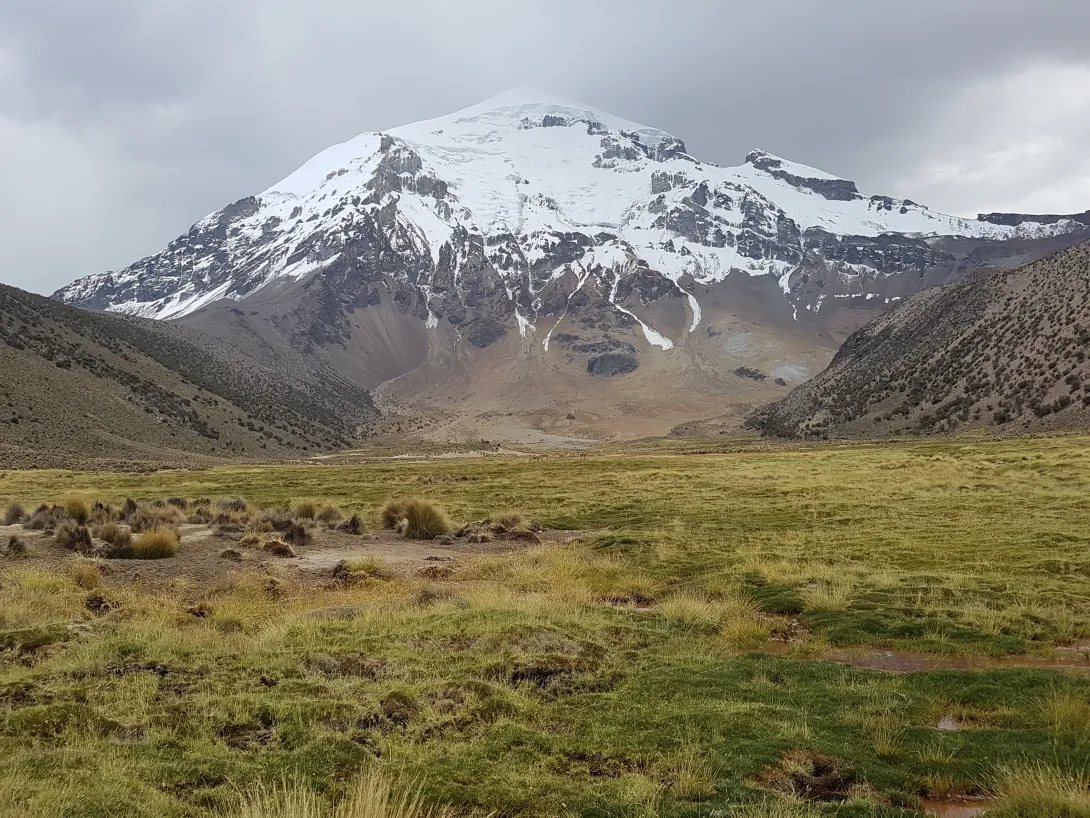
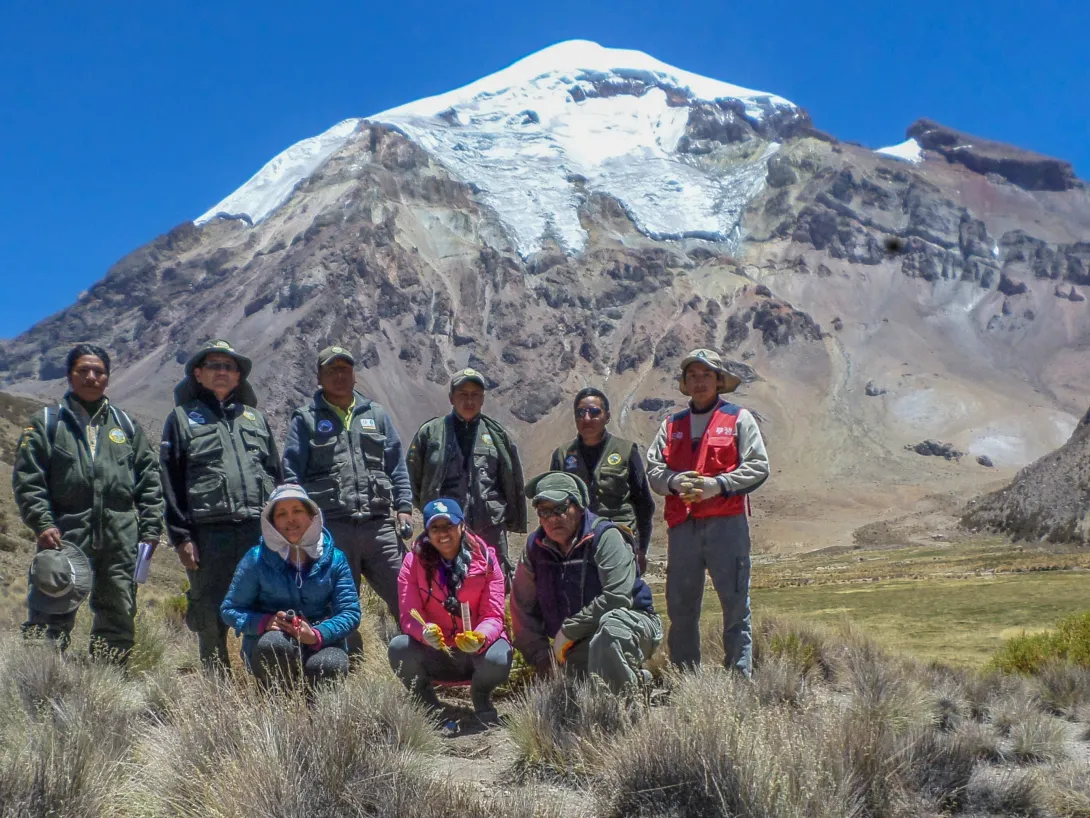
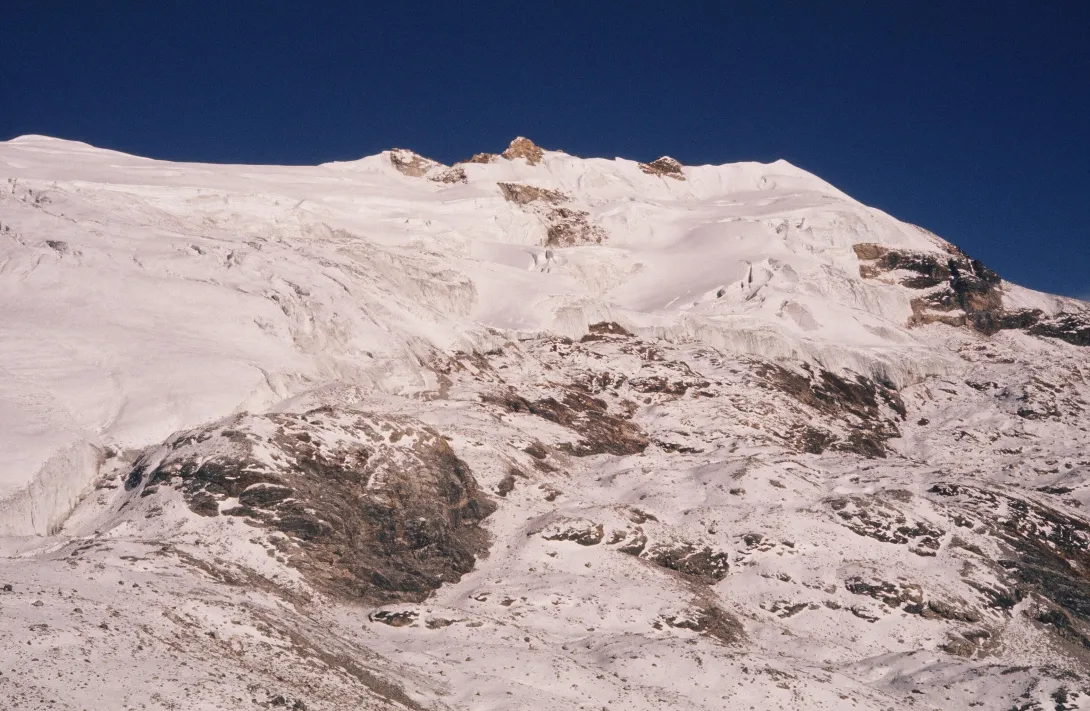
After years of working in mountain regions, the changes are undeniable — you see them with your own eyes. Glaciers are shrinking, and landscapes are transforming. In Bolivia, studies show a loss of more than 50% of glacier surface in some areas. For example Mountain Sajama, the highest mountain in Bolivia, has dramatically lost ice over recent decades. But it’s not just something scientists notice — everyone living in La Paz can see that the near-by Mountain Illimani no longer has the same white mantle it once had. Its snowy cover is thinning, and that visual change alone tells us how fast things are shifting. 

 
The loss of glacier water affects wetlands (bofedales), agriculture, and the daily lives of highland communities. In La Paz, we rely only partially on glacier meltwater, but many rural areas depend heavily on it. Women in these communities are often on the front lines, managing water, farming, and sustaining families amid growing scarcity. It’s both a scientific and human crisis, one that calls for urgent action. 

On the images:
Illimani, the second highest mountain in Bolivia (6432 asl.).

Sajama, the highest mountain in Bolivia (6542 asl.).

Paula with a group with Sajama in the background.
All photos: Paula Lady Pacheco Mollinedo 

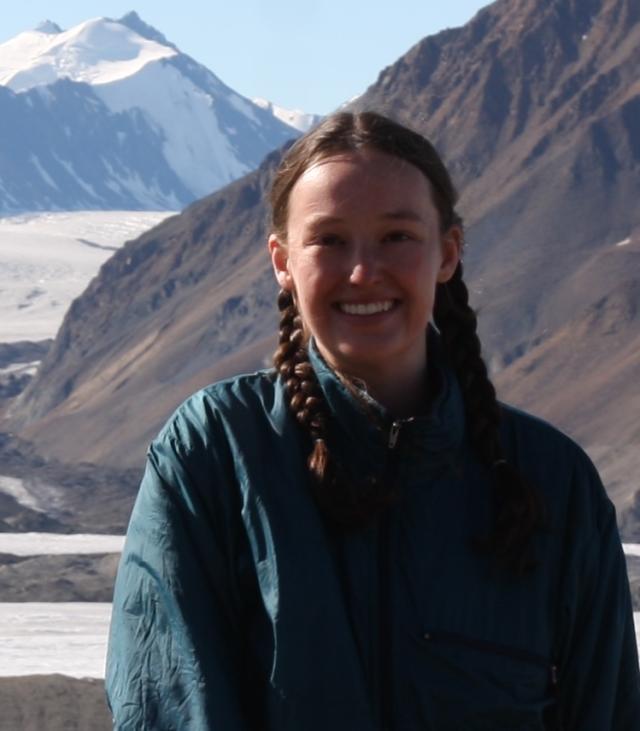
Katherine Robinson
Vancouver, British Columbia, Canada
Glaciologist
Simon Fraser University, Canada

I am a glaciologist studying how glaciers in northern Canada are responding to climate change. Glaciers are also very important to me as someone who lives near the mountains and enjoys travelling and recreating in the backcountry. In the Coast Mountains of British Columbia, glaciers are both a stunning feature of the landscape and a powerful indicator of environmental changes. 

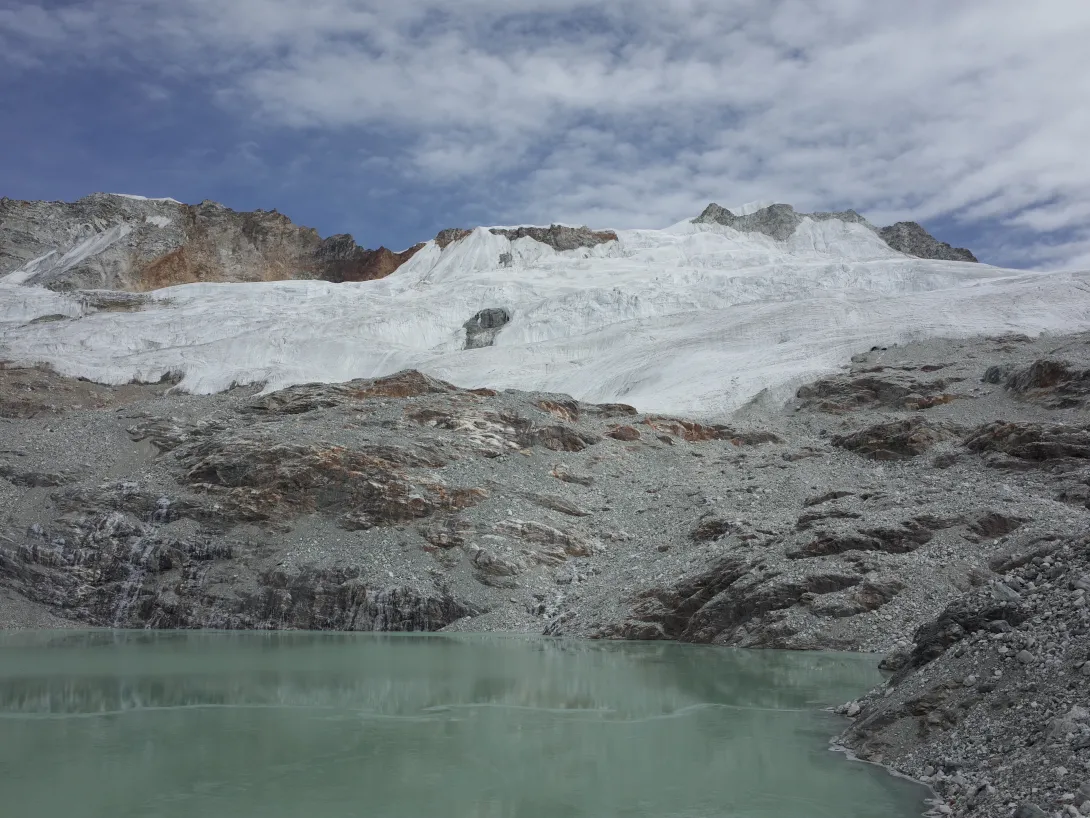
These glaciers have undergone pronounced thinning and retreat in recent decades. In some areas, this has led to the formation of new glacial lakes. One well-known example is the popular Wedgemount Glacier. In the last two decades it retreated by nearly 400 meters. In 2013 this caused the formation of a new proglacial lake. Now, the glacier sits high above the lake after record-breaking heat waves over the last few summers.  

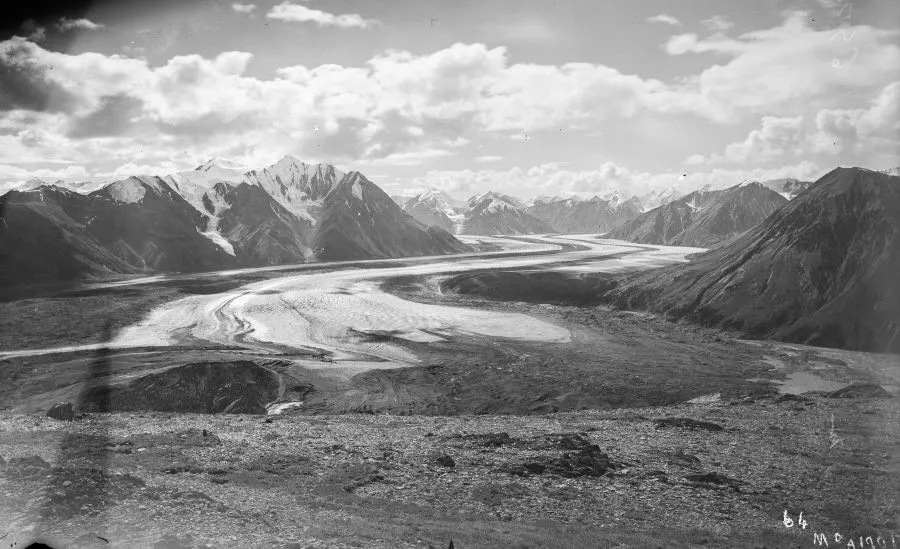
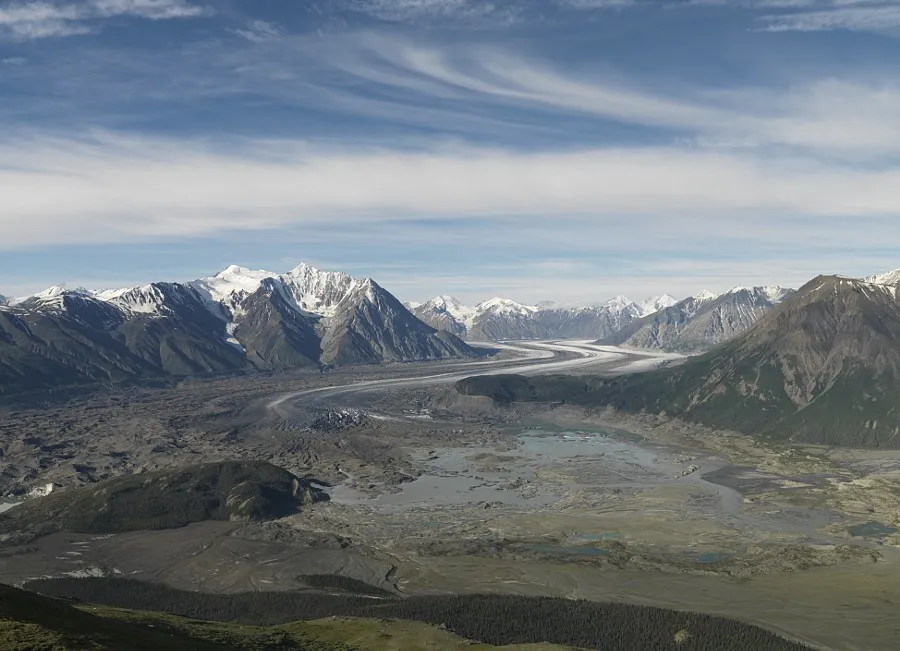
Canada is experiencing some of the fastest rates of climate warming in the world - about twice the global average, and nearly three times higher than average in the Canadian Arctic. Glaciers are a key component of the water budget in many regions, and glacier retreat is already having a profound effect on downstream hydrological systems. One striking example is the Kaskawulsh Glacier in Yukon. Glacier retreat caused a sudden and dramatic river rerouting event in 2016. Meltwater that previously flowed north via the Ä'äy Chù (Slims River) to the Bering Sea, was diverted south to the Gulf of Alaska. This event had many downstream consequences, including record low water levels in Łhù'ààn Mân (the largest lake in Yukon), and frequent dust storms on the now dried Ä'äy Chù floodplain. 

Profile photo: Katherine Robinson

On the images:
Changes in the Kaskawulsh Glacier between 1900 to 2012. The Kaskawulsh Glacier is located in the St. Elias Mountains of Yukon, within the Traditional Territories of the Kluane, Champagne & Aishihik, and White River First Nations. The retreat has been associated with the formation and growth of two proglacial lakes. 
Photos: 1900, J. J. McArthur. Exhibited with permission from the Mountain Legacy Project / 2012, Mary Sanseverino. 

Wedgemount Glacier, British Columbia, Canada, 2023. The glacier has been rapidly retreating since the 1970s. In 2020, the terminus of the glacier reached the edge of the lake. Photo: Katherine Robinson.

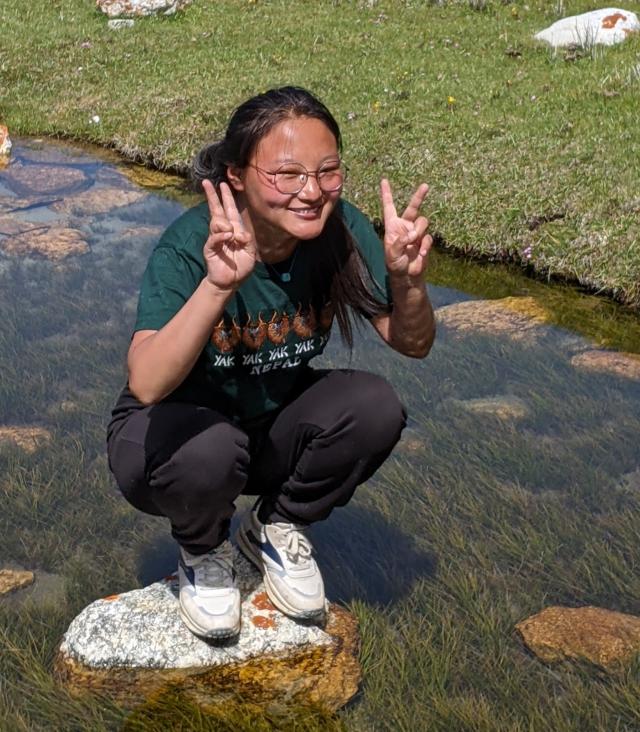
Tashi Lhazom
Limi Valley, Nepal
Academic researcher, Filmmaker, and Climate activists

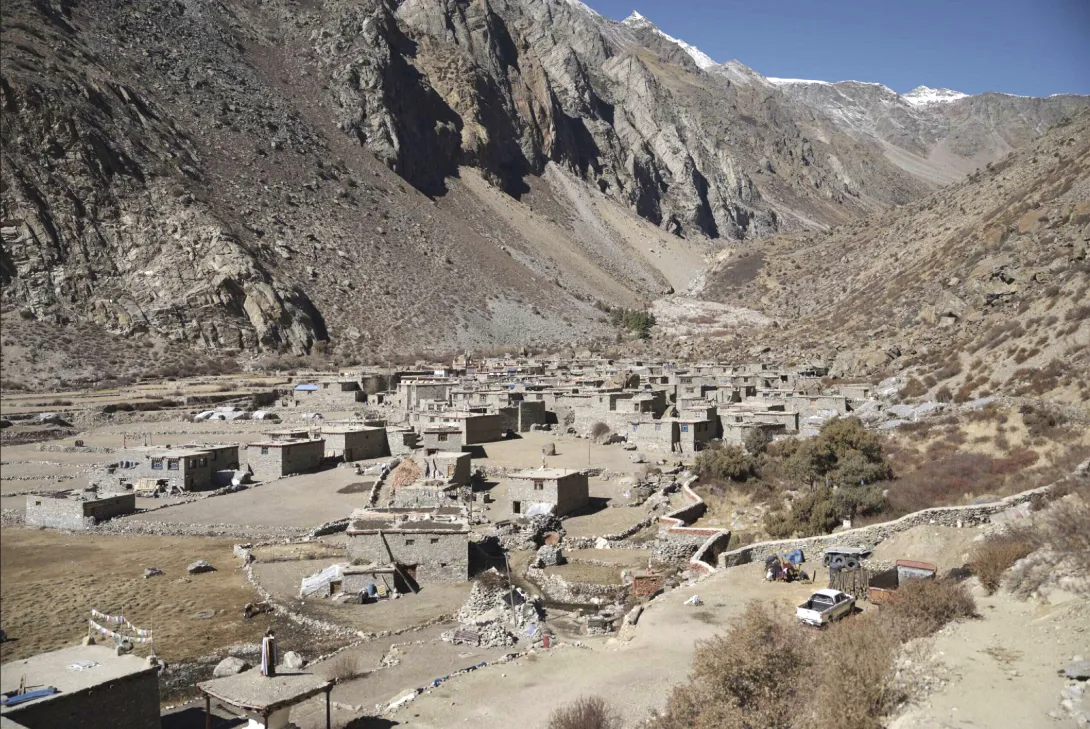
To me, a glacier is not just ice — it is identity. I was born among snow and ice at 3,800 meters, raised on glaciated pastures at 4,700 meters in Limi Valley, Nepal. My childhood was shaped by snow capped peaks, glacier-fed rivers, and the yaks we herded beneath the Halzi Glacier. Glaciers are woven into the way of life, spirit, and survival of my Indigenous community. 

All the glaciers I grew up with have shrunk dramatically. The Halzi Glacier, in particular, has melted so rapidly it’s formed a lake beneath it, triggering glacial lake outburst floods. The landscape I once knew is vanishing before my eyes. And I felt the need to raise awareness to save it.  

 
Our very existence is at risk. Thawing permafrost and vanishing water sources threaten our survival. Glacial lake outburst floods from the Halzi Glacier have put our ancient 1,000-year-old monastery — the heart of our spiritual and cultural life — in danger. We now live in constant fear, just 6.5 km from a glacier that once gave us life, and now brings uncertainty. 

Profile photo: Tashi Lhazom 

On the images:
The Halzi Glacier, Limi Valley, Nepal.

The village Halzi in Nepal, where Tashi Lhazom lives. 

The Rikha Samba Glacier in 1974 and 2024.

The Yala Glacier in 1980 and 2015
All photos: Amar Maharjan

Hazi breen
Nepal Halzi landsby
Rikha Samba 1974
Rikha Samba 2010
Yalabreen 1980
Yalabreen 2015
Per Arne Vole
Lom, Norway
Manager
Galdhøpiggen Summer ski centre

I work close to the glacier every day at the summer ski centre, and have been following its development for 37 years. The glacier is an important part of my workplace as well as the local environment – ​​as a nature experience, cultural heritage and valuable resource.  
 
In recent years, we have observed clear changes. The glacier has retreated noticeably. Snowmelt begins earlier, and the season for summer skiing is shorter. The ice and snow are also more unstable, requiring more planning and safety work than previously.  
 
A shorter season and more uncertain conditions pose challenges for the operation of the ski centre. This affects both our economy and the number of people employed. Tourism in the area is also affected by the consequences – fewer visitors result in less demand for accommodation, catering and other local services. We are working to adapt, but the changes are clear and serious for many in the village. 

Profile photo: Even Lusæter/NRK

The image:
The summer ski centre on the glacier Vesljuvbrean in Jotunheimen, Norway.
Photo: Lorenzo Poli

Kva er løysinga?

The only realistic way to preserve the world’s glaciers is through immediate and ambitious action to decrease emissions of greenhouse gases and through the adoption of transformative adaptation and mitigation strategies. This means we need a systematic shift in our society, how we live and consume. Decreasing greenhouse gas concentrations will stabilise the climate and is the best option we have to limit glacier melt. 

Short-term solutions such as covering glaciers in sheeting are possible only in wealthier nations,but are impractical for those most affected by the loss of glaciers. Many of the solutions proposed or already in use are harmful to the environment. Like the glacier blankets containing plastic, linking them to oil production and increased greenhouse gas emissions. 

Local solutions - Glacier weddings

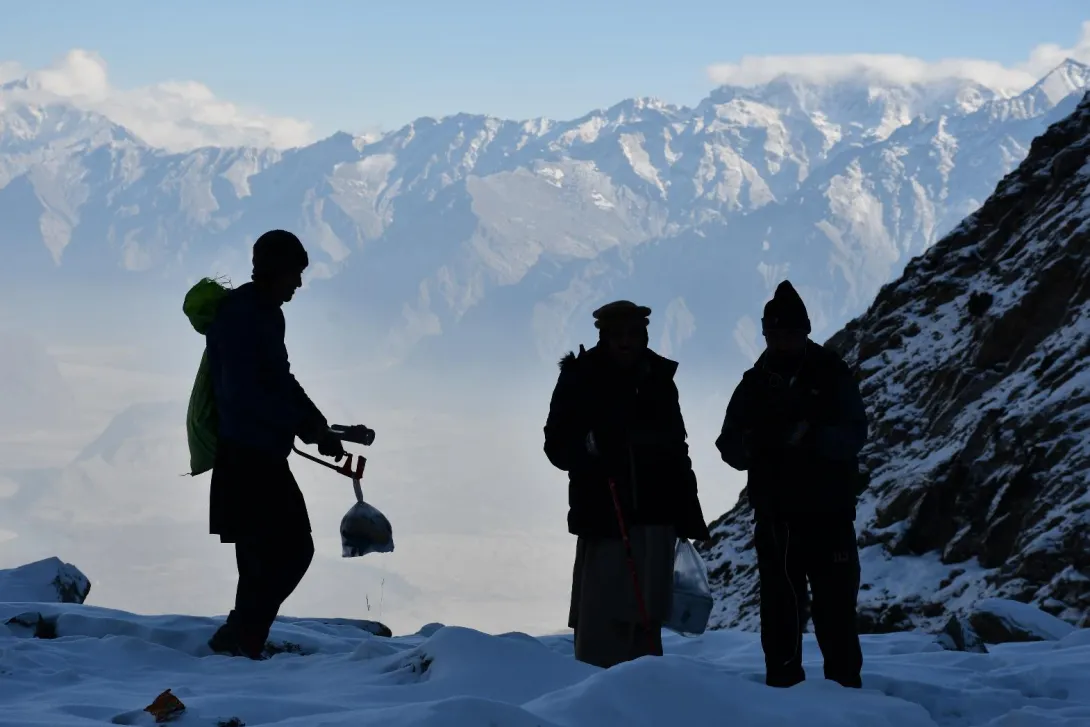
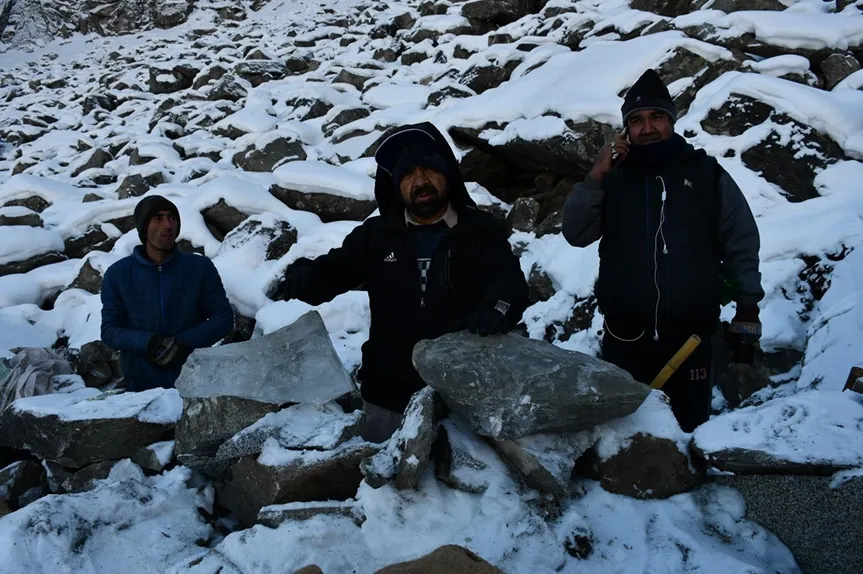
In northern Pakistan lies the Karakoram mountain range, one of the largest mountain ranges in Asia. Its highest peak is K2, also the second highest mountain in the world. The glaciers here face the same challenges of melting as those in other parts of the world.  

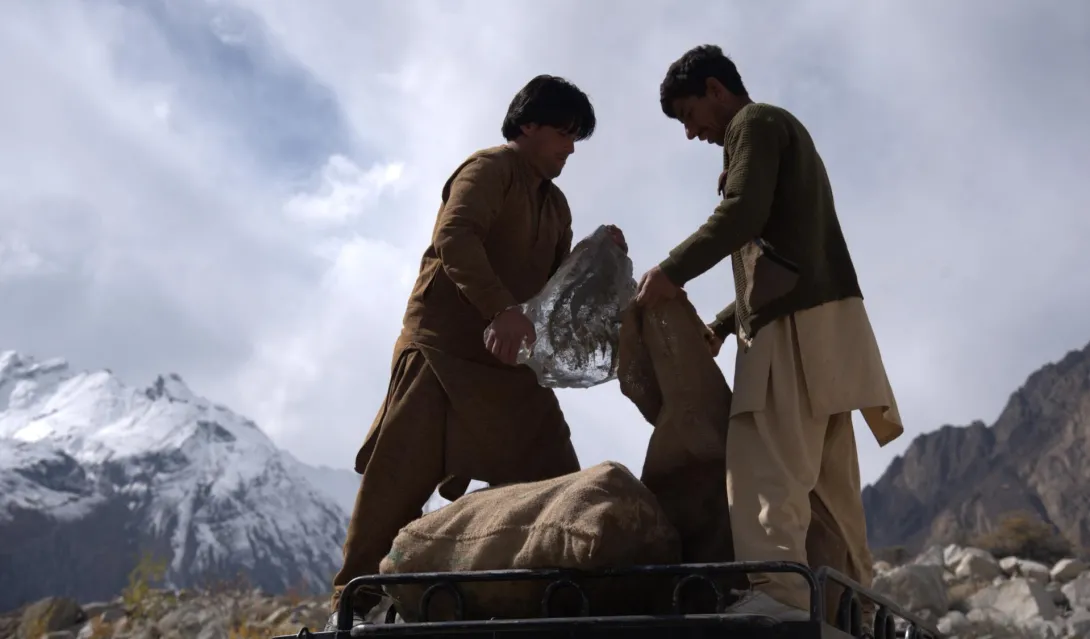
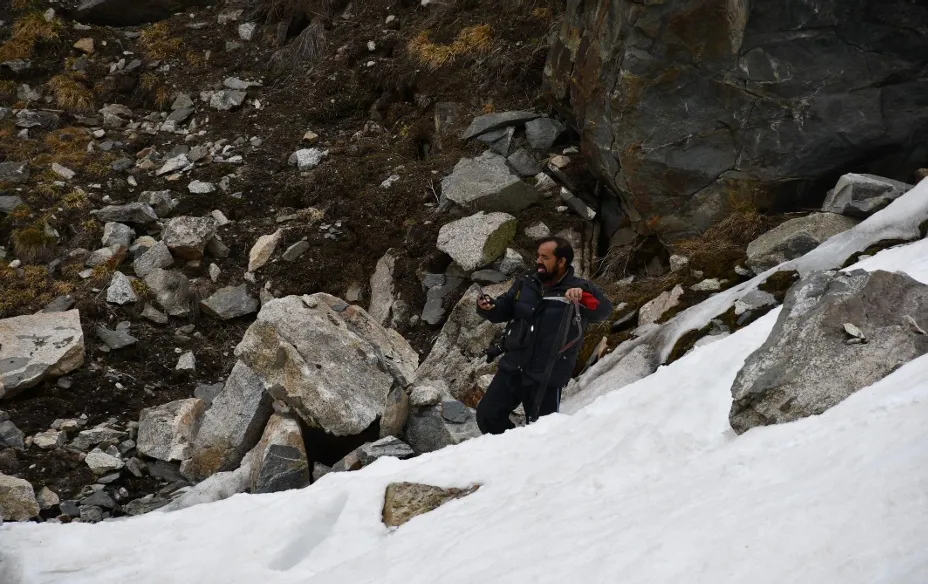
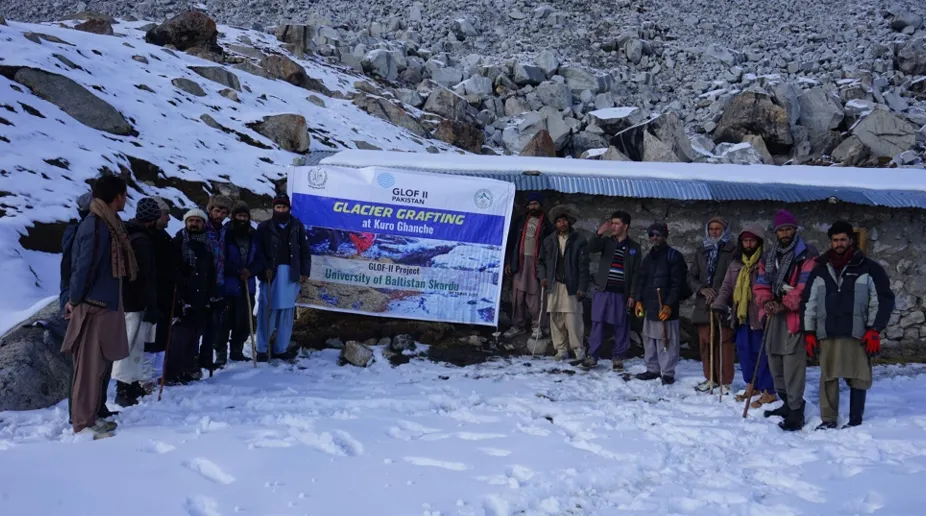
In response to the situation, an ancient Indigenous practice known as a "glacier grafting" or "glacier weddings" has been revived. This practice involves cultivating new glaciers by merging ice masses from different existing glaciers. According to traditional beliefs, white ice is considered female, while dark ice is considered male. 

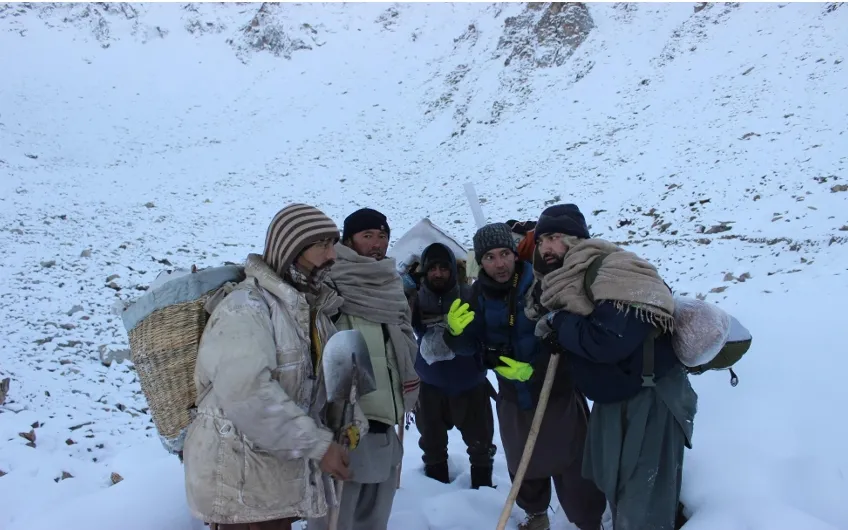
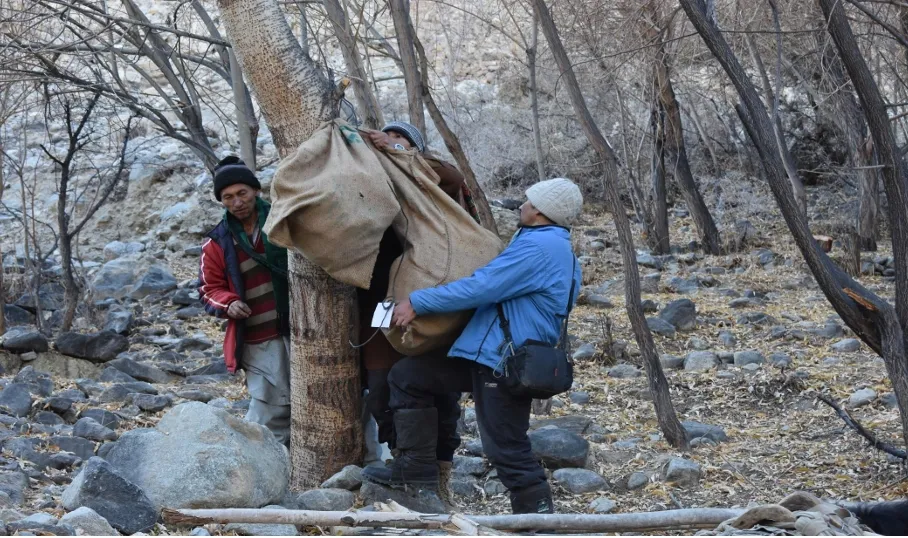
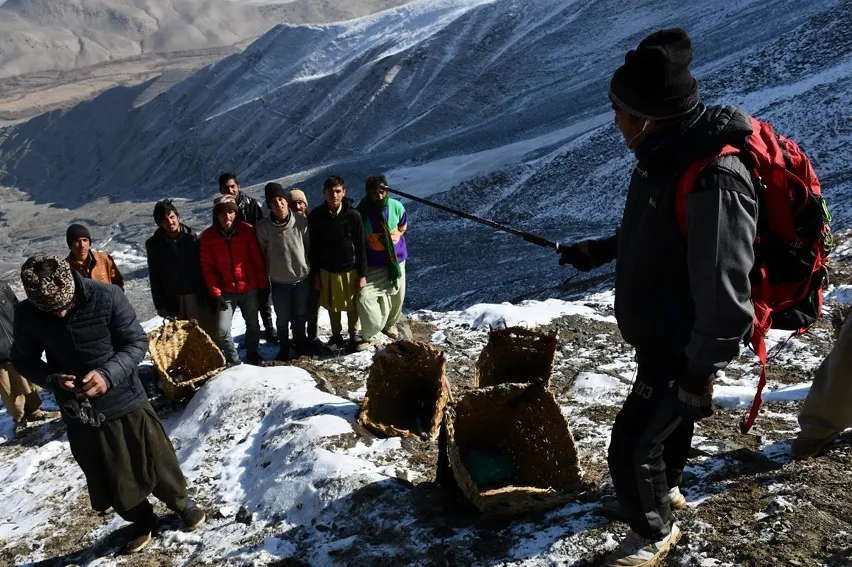
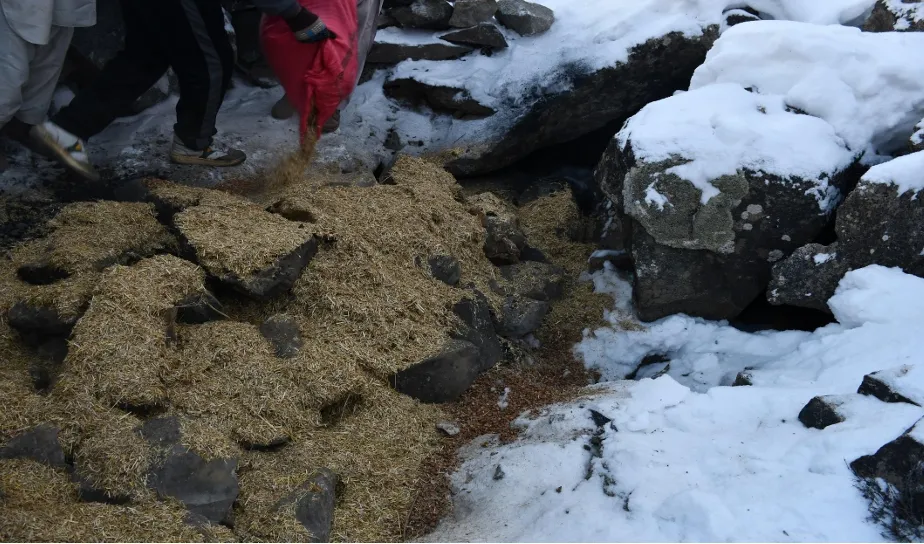
Ice from different glaciers is carried high into the mountains to a chosen site over 4,000 meters above sea level, where permafrost and low temperatures prevail. There, the ice masses are placed together in a cave, with the goal of growing a new glacier from this location. 

The images show the work of collecting ice and transporting it up into the mountains. The University of Baltistan, led by Dr. Zakir Hussain Zakir, has conducted several projects with various communities, both with glacier weddings and other methods for storing ice. In the video, you can hear him talk about the work. Photo and video: Dr. Zakir Hussain Zakir.

Bremasse frå dei ulike breane blir båre opp i fjellet

Local solutions - Ice stupas

Water security for the 250 million people of the Hindu Kush-Himalaya region in India is under threat. Glaciers act as natural reservoirs that accumulate snow and ice during the winter and release meltwater during the dry summer months. This ensures a consistent water supply for rivers and streams.  

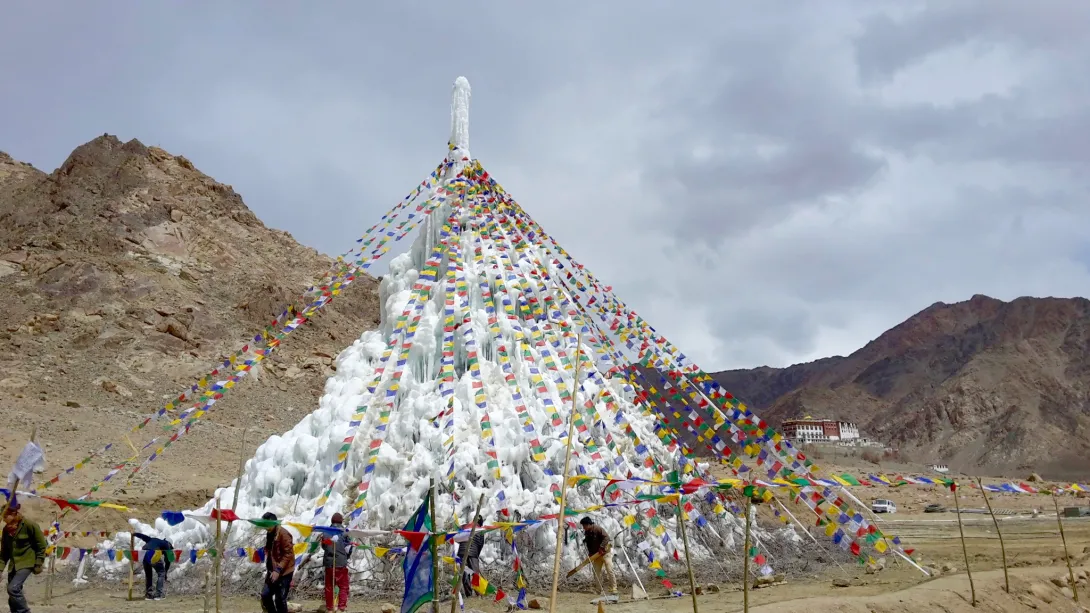
In high-altitude desert regions such as Ladakh, India, precipitation comes mainly in winter but is unavailable during the crucial spring season when farmers sow their crops. As a response, Sonam Wangchuk, an engineer, innovator, and education reformist from Ladakh developed artificial glaciers, also known as Ice stupas.  

These artificial glaciers are formed in winter by channelling stream water downhill and spraying it into the cold air, where it freezes into large, cone-shaped ice structures. They secure water supplies by gradually releasing water during spring and early summer, when it is most needed for agriculture. One stupa can release up to 11,000 litres of freshwater daily. 

The name Ice stupa comes from the resemblance to Buddhist stupas, dome-shaped structures often used as shrines or monuments in Tibetan Buddhist culture.  

In the video below, you can hear the founder of the project, Sonam Wangchuk, talk about the work.

Photo: Sonam Rinchen

Is-stupa med flagg

Local solutions - covering and snow production

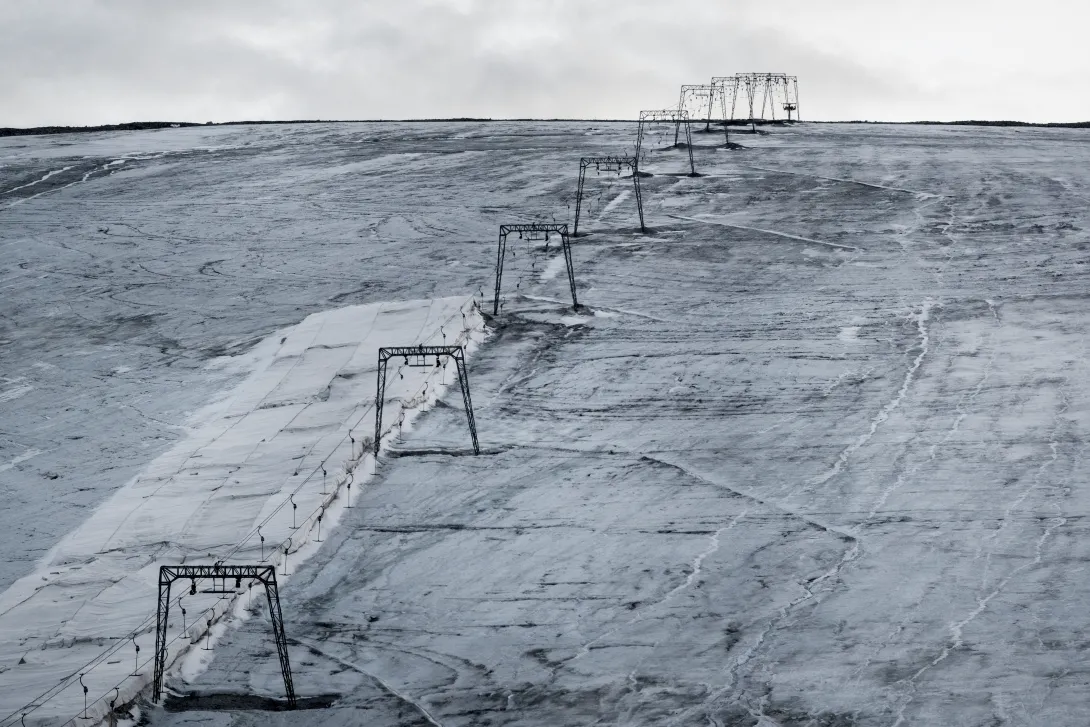
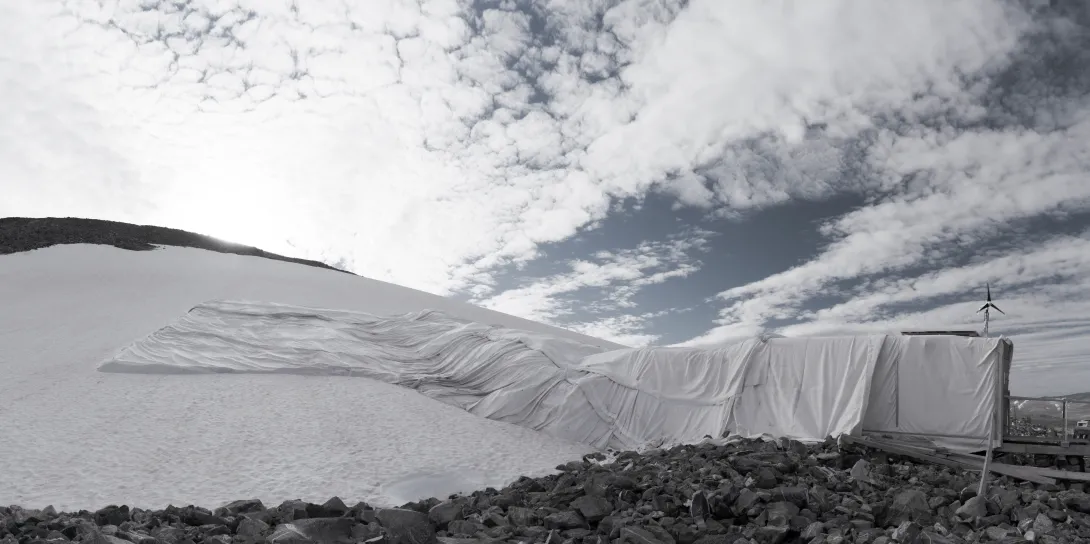
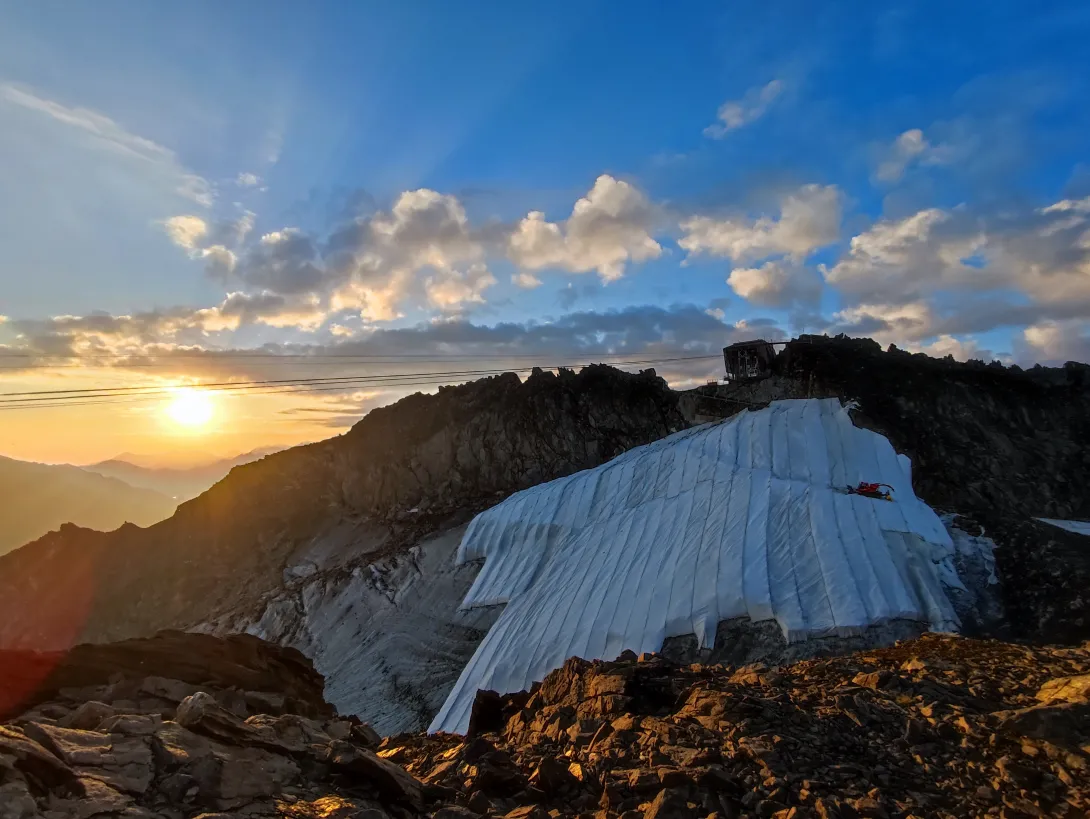
Since the early 2000s, artificial snow production, snow redistribution and glacier insulation with fabrics have been used locally to slow down melting. At several ski resorts, both in Norway and Switzerland, these methods have been crucial for preserving the facilities. The UV-resistant fabric reflects sunlight, keeps warm rainwater away, and lowers the ice surface temperature. Locally, this has been done at Galdhøpiggen Summer Ski Centre on Vesljuvbrean and over the ice tunnel in the Climate Park 2469 on Juvfonne. 

However, the material in the fabric poses a risk of spreading microplast, and efforts are underway to find more eco-friendly alternatives. Another challenge is that this method is expensive and labor-intensive. The solution is effective locally, but only small areas can be covered. In Switzerland, only 0.02% of the glacier area is covered with fabric. 

The images show fabric covering the ice tunnel in Climate Park 2469 in Norway and a glacier in the Gemstock mountain in Central Switzerland. Photo: Lorenzo Poli/ Matthias Huus.

Duklegging i Klimapark 2469

The cemetery of lost glaciers

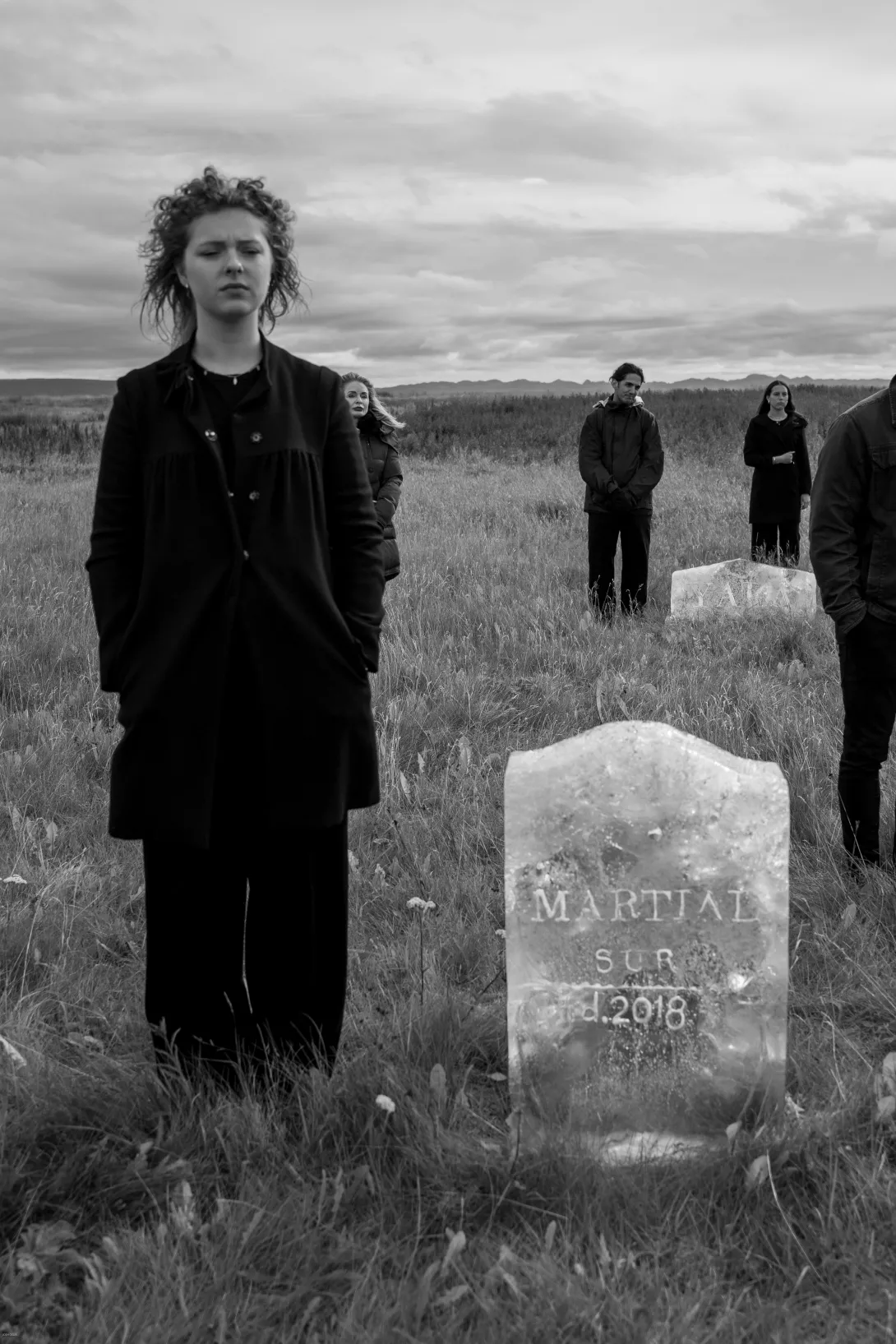
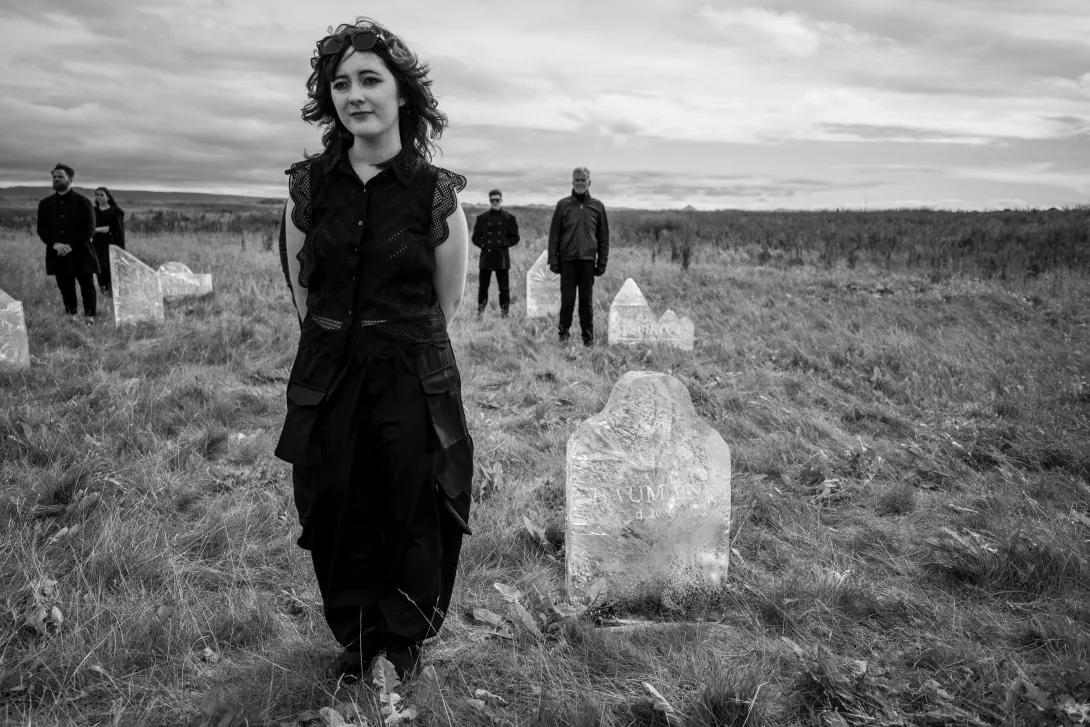
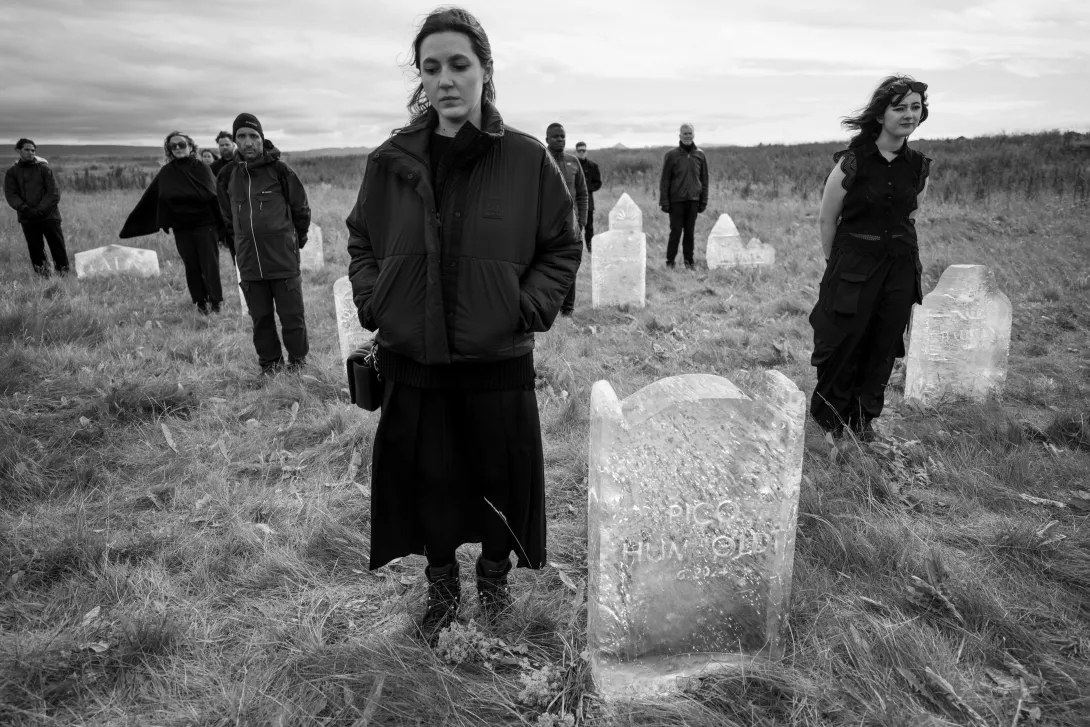
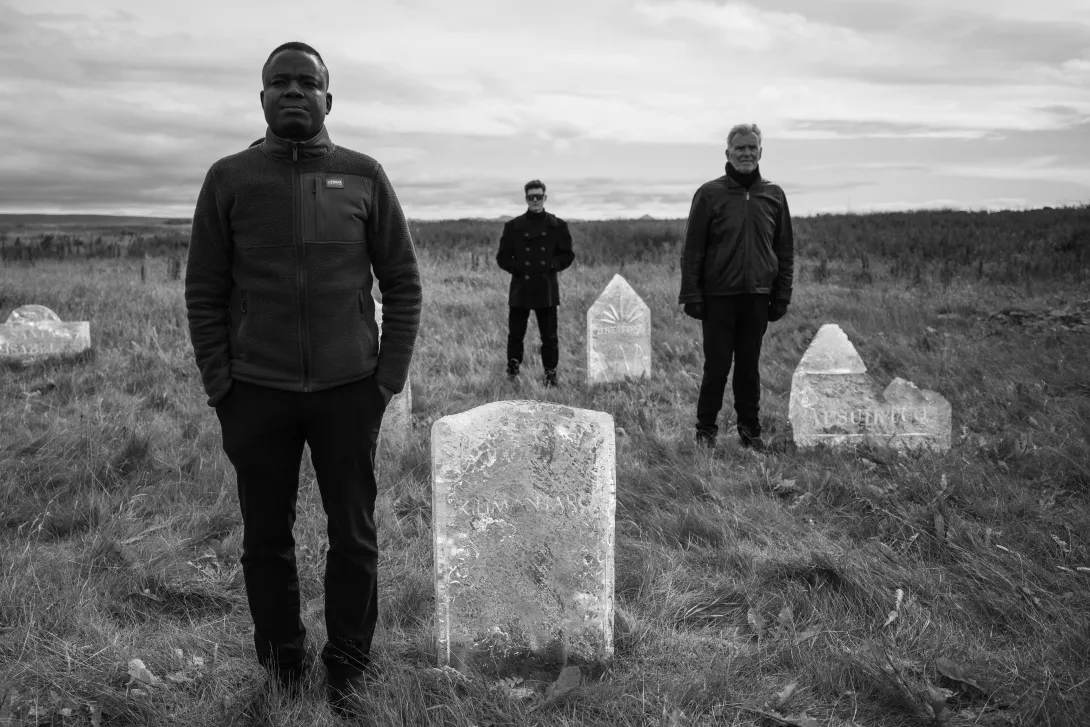
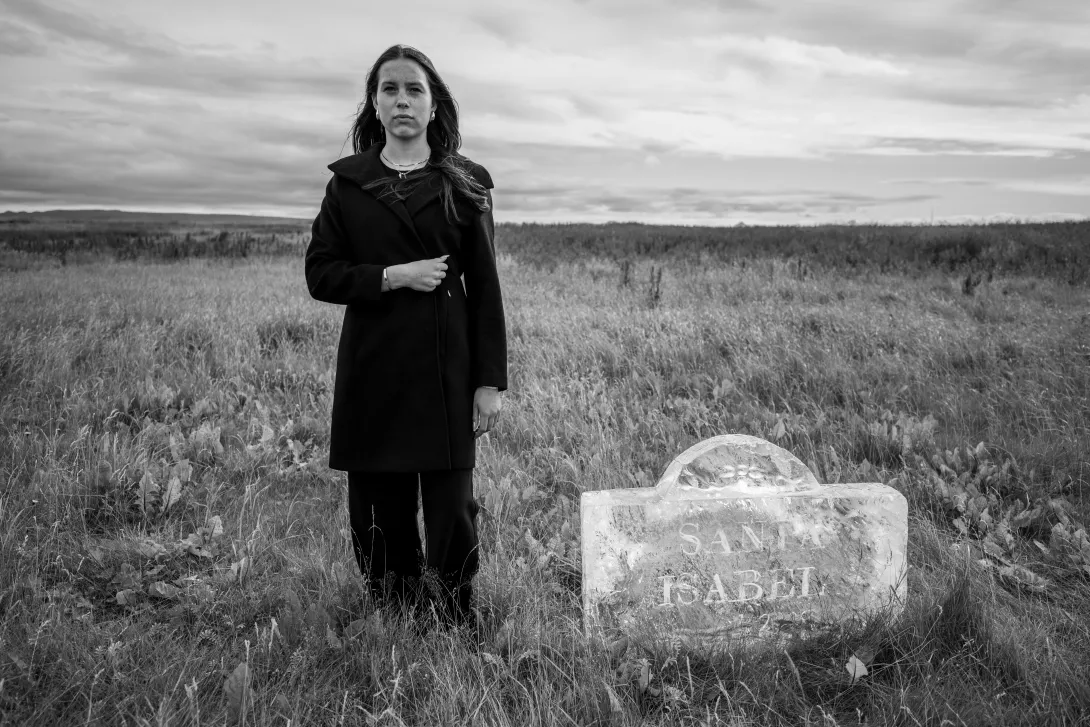
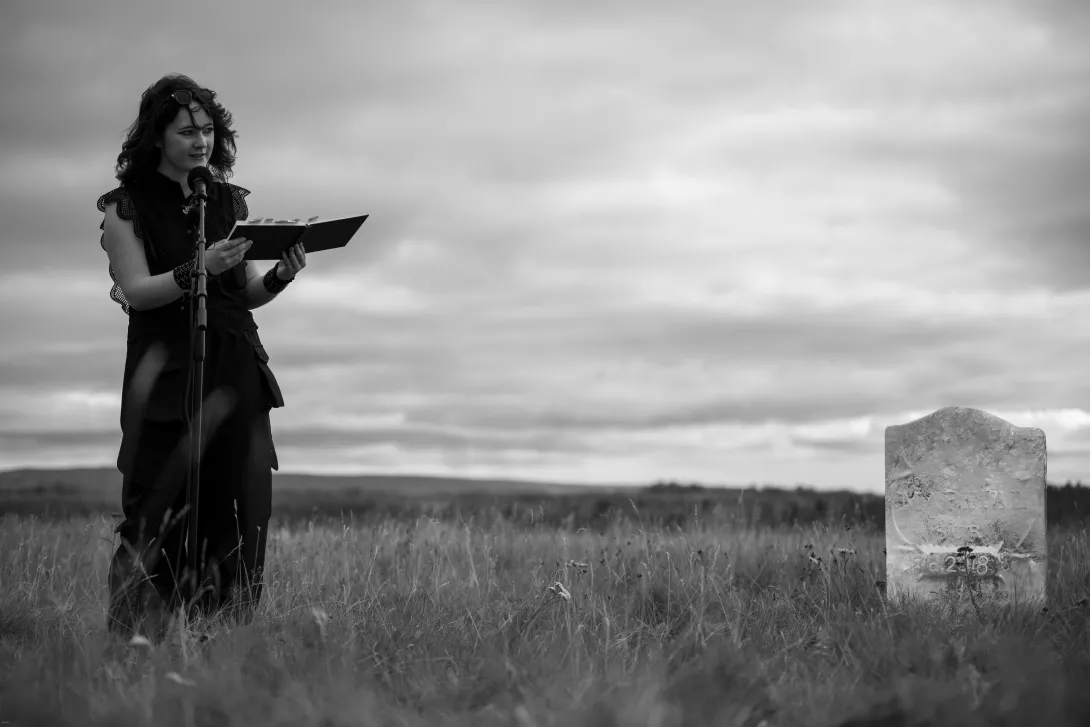
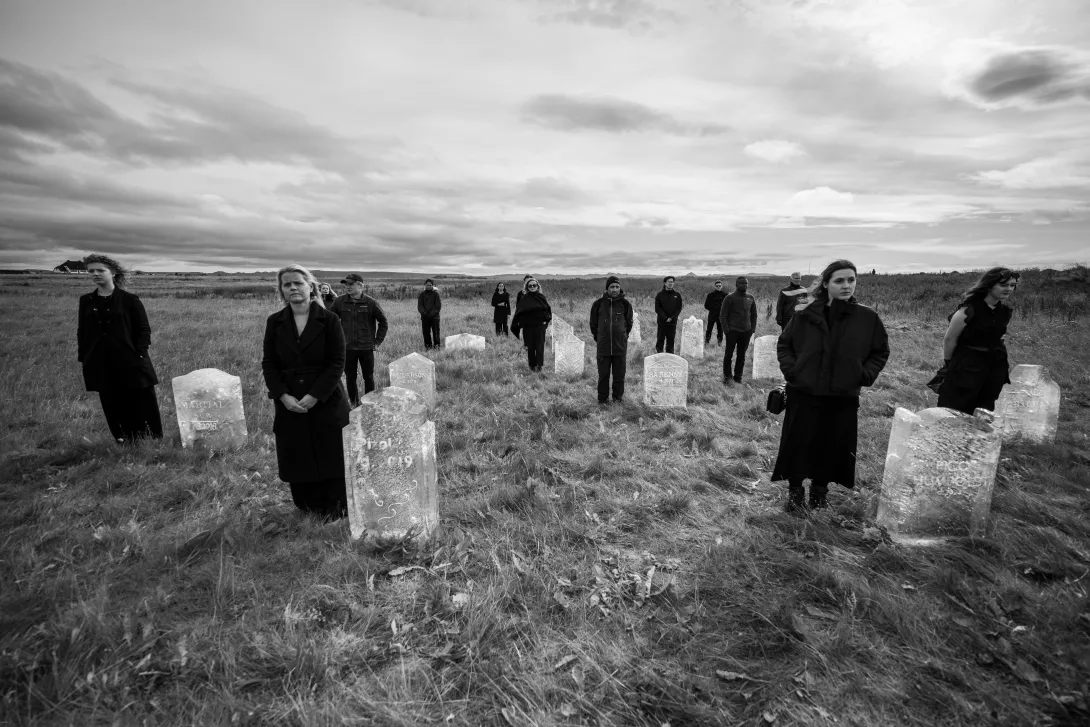
On 17th August, 2024, an extraordinary ceremony took place in Iceland. A glacier cemetery  opened, featuring gravestones made of ice to symbolise glaciers around the world that have disappeared or are about to disappear. Representatives from several countries were present at the ceremony.  

The event was part of the Global Glacier Casualty List project, which tracks the loss of glaciers around the world. They tell digital stories about the local human impact of disappearing glaciers. 

The project consists of a team of anthropologists and glaciologists led by Cymene Howe, Dominic Boyer, Guðfinna Aðalgeirsdóttir, and Hrafnhildur Hannesdóttir. 

Global Glacier Casualty List 

Photo: Dominic Boyer

Thanks to


The Norwegian Mountain Center is the owner of the project. 

The project team consists of: 

  • Thea Grobstok Dalen, Project Manager, Norwegian Mountain Center
  • Merete Dagsgard, Graphic Designer, Norwegian Mountain Center/HAUS
  • Liss M. Andreassen, Senior Researcher, NVE
  • Miriam Jackson, Researcher, NVE 


Other contributors to the exhibition: 


Thanks to Sparebankstiftelsen for founding the project

For more information, contact: 

Thea Dalen 

Tlf. 0047 90656326 
E-mail: thea@norskfjellsenter.no 
The Norwegian Mountain museum 
Brubakken 2 
2686 Lom